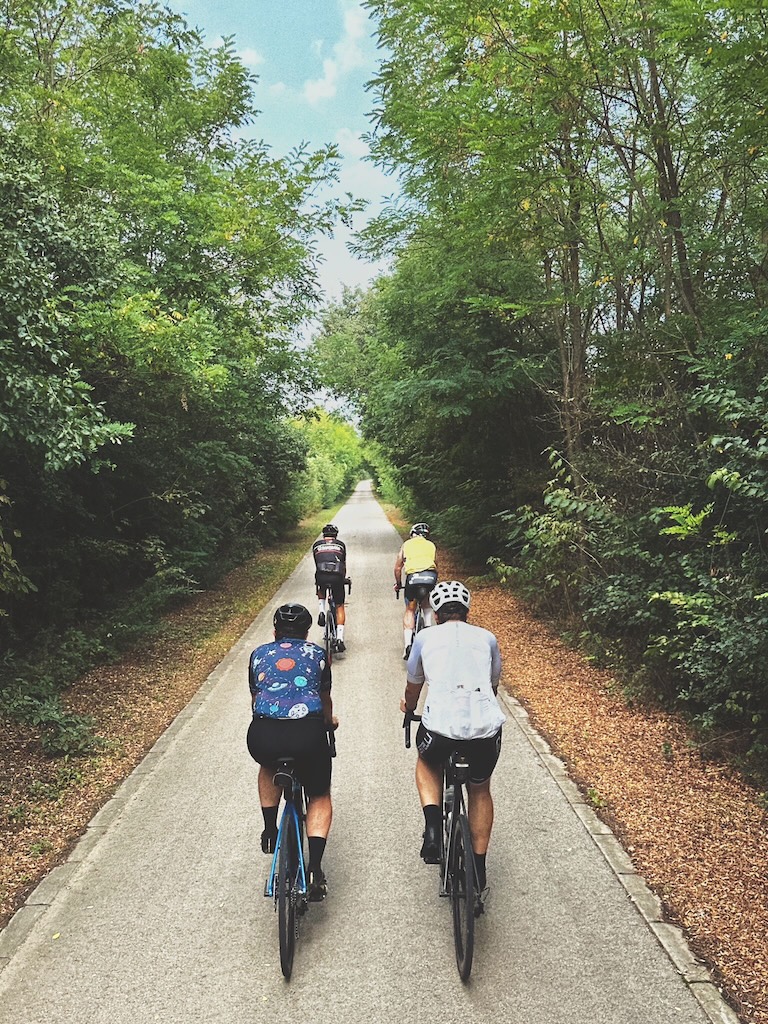
 by Peter Illés on January 2nd, 2026
The Balkans don’t announce their climbs with glossy brochures or neatly ranked lists. And that’s exactly why they matter. This is a region where serious elevation gain comes with quiet roads and landscapes that still feel worked rather than curated.
The climbs below are some of the most rewarding in the Balkans. Not just because they’re hard, but because they define journeys, connect regions, and turn long days in the saddle into experiences that stay with you long after the descent.
🇷🇴 Romania
Romania is home to the region’s two most legendary roads, famed for their high altitudes and sweeping curves. For riders looking for a truly demanding day in the saddle, Romania has a lot more to offer beyond them.
Transfăgărășan
The Transfăgărășan is Romania’s most recognizable climb, but its appeal goes beyond the famous switchbacks. The road rises steadily through dense forest before opening onto a high alpine basin where scale becomes the defining feature. Gradients remain consistent enough to encourage rhythm, making it a climb that rewards patience rather than explosive power. In peak summer, traffic can be an issue, but riding early or late in the day transforms the experience.
Open: mid-June to October
Northern ascent (from Cârțișoara): Length 29.8 km, Avg. gradient 5.2%, Total ascent 1546 m
Southern ascent (from Vidraru Lake): Length 54.5 km, Avg. gradient 3.3%, Total ascent 1820 m
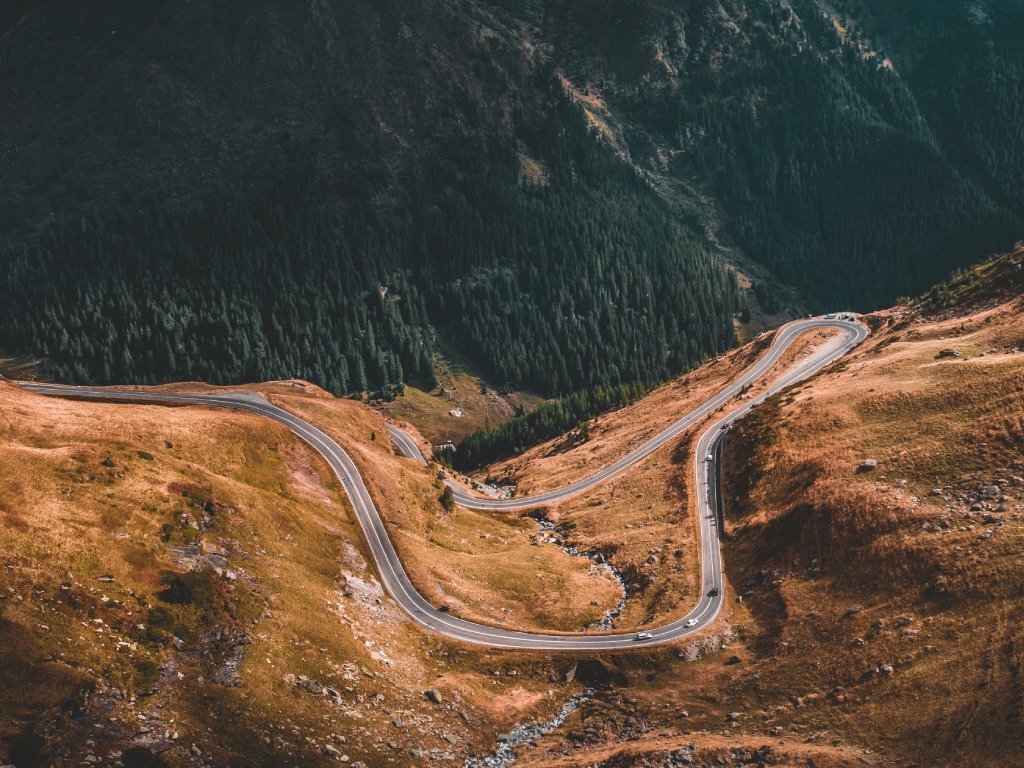
The Transfăgărășan is famous for its 39 hairpins and switchbacks.
Transalpina (Urdele Pass)
If the Transfăgărășan is dramatic, the Transalpina is expansive. Rising higher and spending more time above the treeline, it feels more exposed and more remote. Weather plays a larger role here, and the road often feels like it’s crossing the mountains rather than carving through them.
The climb works best as part of a multi-day route, where its length and altitude feel earned rather than rushed. Paired with the Transfăgărășan, it forms one of the most complete mountain cycling experiences in the Balkans.
Open: mid-May to October, between 08:00 and 20:00
Northern ascent (from Sebeș): Length 106 km, Avg. gradient 2.6%, Total ascent 2800 m
Southern ascent (from Novaci): Length 27.3 km, Avg. gradient 6.2%, Total ascent 1702 m
Eastern ascent (from Petroșani): Length 45.4 km, Avg. gradient 4.2%, Total ascent 1940 m
Transbucegi / Drumul Babelor
The Transbucegi climbs onto the Bucegi Plateau via a steady, well-surfaced road that trades steep gradients for sustained altitude gain. The riding is smooth and scenic, with wide views opening as you approach the plateau. The optional detour to Drumul Babelor adds extra elevation and a more dramatic finish near the plateau’s distinctive rock formations, turning a scenic climb into a proper high-mountain effort.
Transbucegi: Length 32.8 km Avg. gradient 3.8% Total ascent 1270 m
With Drumul Babelor: Length 48.6 km Avg. gradient 3.3% Total ascent 1600 m
Transvâlcan
The Transvâlcan is one of Romania’s steepest paved climbs and remains largely off the radar. The ascent is short, aggressive, and quiet, with gradients that demand attention from the first kilometres. Above the summit, the road transitions into gravel toward Gorj County, creating a natural continuation for riders who enjoy mixed surfaces.
Asphalt climb: Length 10.8 km, Avg. gradient 9.2%, Total ascent 1000 m
🇧🇬 Bulgaria
Bulgaria’s climbs rise through forested massifs and historic corridors, from the city-edge grind of Vitosha to the steep alpine ramps of Rila and the exposed Stara Planina.
Vitosha
Vitosha rises directly above Sofia, making it one of the most accessible mountain climbs in the Balkans. Despite its proximity to the city, the ascent quickly leaves urban life behind, climbing through forested slopes toward open mountain terrain.
The road is steady and direct, ideal for a sustained effort, with higher sections offering wide views back toward the capital. It’s a popular climb for locals and a natural starting point for exploring Bulgaria’s mountain riding.
Length 15.3 km Avg. gradient 7% Total ascent 1068 m
Rila (Kalin Dam)
The climb toward Kalin Dam in the Rila Mountains is one of Bulgaria’s most demanding ascents. Steep gradients dominate from early on, and the road surface alternates between rough asphalt and gravel sections, keeping the effort both physical and technical.
As the forest thins, the scenery opens into a distinctly alpine environment, with the dam marking a dramatic endpoint. This is a climb best approached with respect, wide tires, and a cautious descent.
Length 16.3 km Avg. gradient 11.1% Total ascent 1812 m
Botev Peak (Yumrukcha)
Botev Peak is a defining challenge for gravel riders in Bulgaria. The climb is long, exposed, and often subject to rapidly changing weather. Surface conditions vary throughout, and the effort is less about holding speed and more about maintaining momentum.
Isolation is part of the experience here. Once committed, there are few distractions, making the summit feel genuinely earned. It’s a climb that rewards persistence with sweeping views and a strong sense of accomplishment.
Length 26.4 km Avg. gradient 6.2% Total ascent 1650 m
🇷🇸 Serbia
Serbia offers sustained, rhythm-based climbing in quiet mountain regions, where long approaches and minimal traffic reward riders who prefer endurance over spectacle.
Kopaonik
Kopaonik offers multiple approaches, each with its own character. The two most notable are the classic climb from Rudnica, and the Jaram, a less-travelled backroad weaving its way through the Kopaonik mountain range.
The climb from Rudnica is long and steady, while the Jaram approach feels more exposed and alpine. Together, they make Kopaonik one of Serbia’s most complete mountain cycling experiences, well-suited to riders looking for sustained elevation gain without heavy traffic.
Rudnica climb: Length 20.3 km, Avg. gradient 6.5%, Total ascent 1320 m
Jaram climb: Length 33.0 km, Avg. gradient 4.7%, Total ascent 1550 m
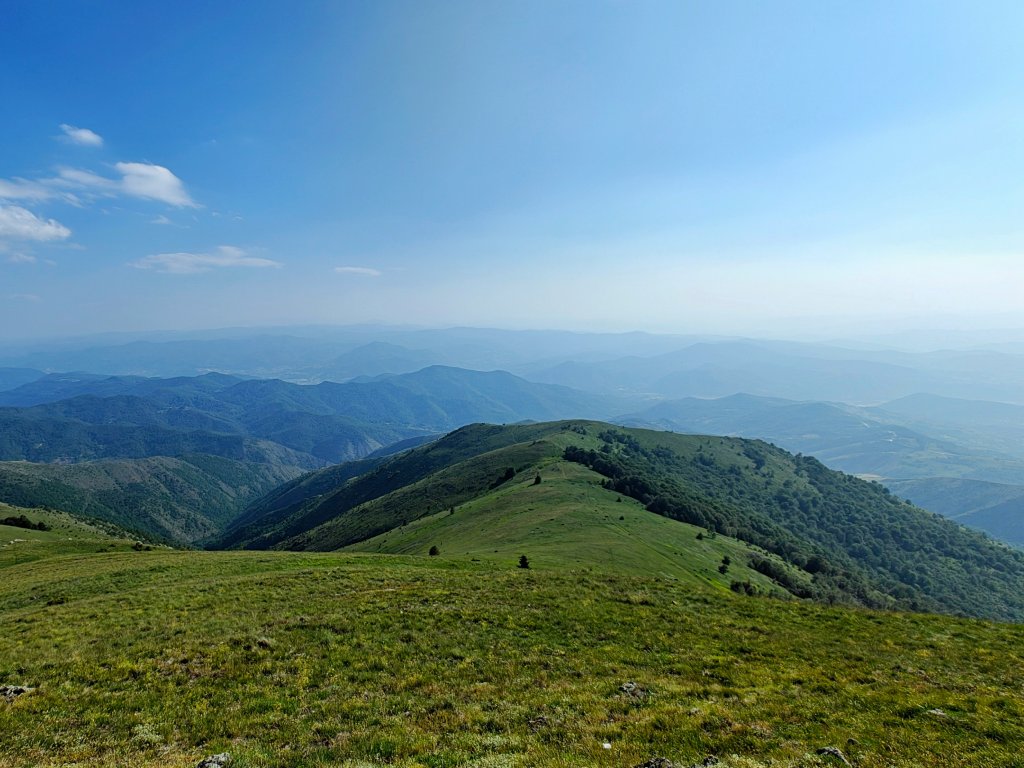
The ski resort of Kopaonik can be a fantastic cycling climb in the summer.
🇽🇰 Kosovo
Kosovo’s Kula Pass typifies the country’s appeal: steady gradients, empty roads, and a feeling of climbing through places that cycling tourism has barely reached.
Kula Pass
Kula Pass is a quietly impressive climb that embodies why Eastern Europe rewards curious cyclists. The ascent is consistent and scenic, passing through sparsely populated mountain landscapes where the sense of remoteness builds gradually rather than abruptly. It works particularly well as part of a longer cross-border or Balkan itinerary.
Length 21.5 km Avg. gradient 6.1% Total ascent 1299 m
🇲🇰 North Macedonia
North Macedonia pairs classic mountain efforts with scenic ascents such as Galičica, where climbing unfolds between two ancient lakes rather than deep alpine valleys.
Popova Šapka
Popova Šapka is a classic high-mountain climb, rising steadily into open alpine terrain. The gradients are manageable, but the length and exposure make it a true endurance effort, especially when combined with surrounding mountain routes.
Length 18.3 km Avg. gradient 6.8% Total ascent 1243 m
Galičica
While not the hardest climb on this list, Galičica offers some of the most rewarding views. Riding between Lake Ohrid and Lake Prespa, the ascent feels almost cinematic, trading gradients for scenery that stays with you long after the ride ends.
From Lake Ohrid: Length 15.7 km Avg. gradient 5.5% Total ascent 869 m
From Lake Prespa: Length 14.3 km Avg. gradient 5.1% Total ascent 727 m
🇦🇱 Albania
Albania’s climbs are bold and uncompromising, from cliff-hugging switchbacks to the dramatic hairpins of Leqet e Hotit rising straight out of the Lake Skadar basin.
Llogara Pass
The Llogara Pass is unforgettable not just for its difficulty, but for its engineering. The road clings to the mountainside above the Ionian Sea in a way that feels audacious, with sweeping switchbacks and long, exposed sections. When I first saw it, my immediate thought was, “Why not build a tunnel?”, which they eventually did, about ten years after my first visit. It’s a climb that feels simultaneously brutal and beautiful.
Length 16.6 km Avg. gradient 6.5% Total ascent 1084 m
Thore Pass & Leqet e Hotit
Starting near Lake Skadar, these two climbs pair perfectly. Thore Pass builds steadily through forested slopes, while Leqet e Hotit delivers dramatic hairpins and open views that feel almost theatrical. Together, they form one of the best climbing sequences in the western Balkans.
Thore Pass: Length 41.1 km Avg. gradient 3.9% Total ascent 1623 m
Leqet e Hotit: Length 14.9 km Avg. gradient 5.3% Total ascent 786 m
🇲🇪 Montenegro
Montenegro concentrates big-mountain riding into a compact space, with long, quiet ascents, stacking serious elevation into short distances.
Prevoj Saddle
The Prevoj Saddle delivers classic Balkan mountain riding: narrow cliffside roads, long gradients, and dramatic shifts in scenery. There’s three variants: the main road through Trsa, an alternative through Vojinovići, which feels a bit more alpine as you ride between mountain huts and pastures, and a variant through Borićje, which sometimes feels like it’s carved into the mountain. All three offer stunning views of the Durmitor mountains.
Via Trsa: Length 37.7 km Avg. gradient 4.2% Total ascent 1580 m
Via Vojinovići: Length 32.6 km Avg. gradient 4.5% Total ascent 1469 m
Via Borićje: Length 31.5 km Avg. gradient 4.9% Total ascent 1526 m
Jezerski Vrh (Lovćen)
This is one of the most visually striking climbs in the region. Rising from near sea level toward Cetinje and the Lovcen National Park, the ascent features a relentless series of hairpins that open sweeping views over the Bay of Kotor. It’s demanding, exposed, and unforgettable. Once up, grab a well-deserved soda outside the Njegoš mausoleum, built in memory of the ruler’s father.
Length 34.2 km Avg. gradient 4.8% Total ascent 1624 m
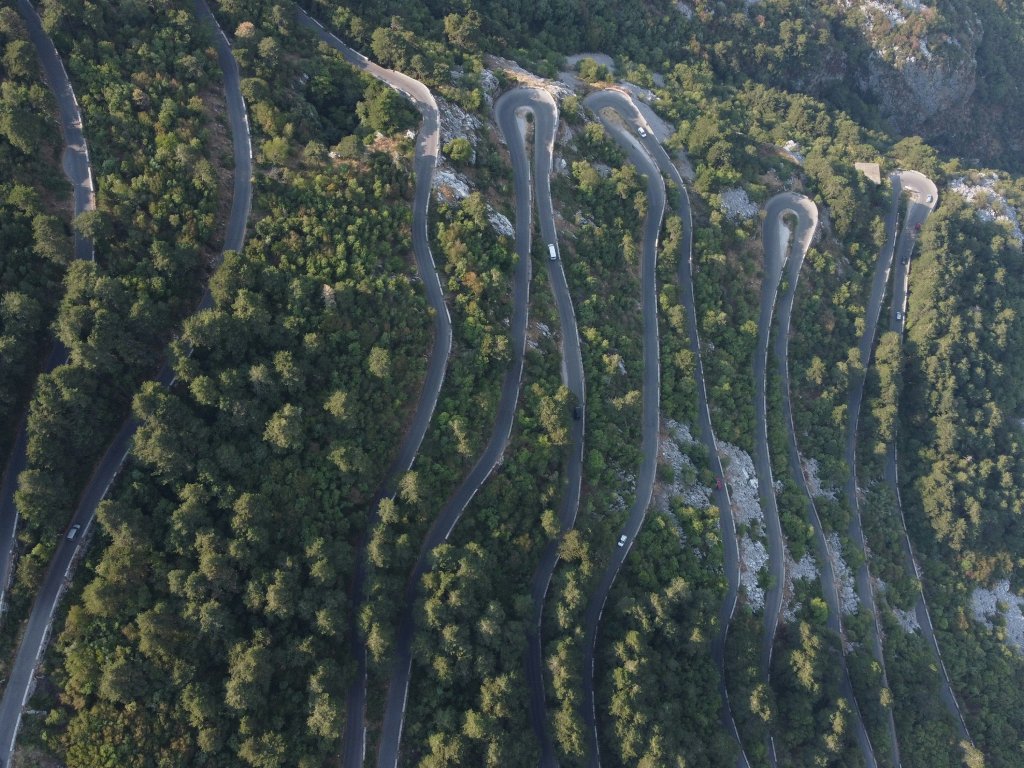
These famous switchbacks climb from the Bay of Kotor to Montenegro’s old capital, Cetinje. 📸 by Matheus Frade
🇭🇷 Croatia
Croatia’s best climbs begin at sea level and finish high above the Adriatic. Climbing the Biokovo or Velebit means combining sustained gradients with constant coastal exposure.
Učka
Učka rises sharply from the Istrian coast, offering a compact but demanding ascent. The climb is purposeful, with gradients that require power but reward riders with wide coastal views near the summit.
Length 22 km Avg. gradient 6.2% Total ascent 1368 m
Mali Alan
Mali Alan is a steady climb with sustained gradients, a rugged mountain setting and unmatchable views of Pag, Lošinj, and Cres islands. Be careful on the descents, as pavement could be better, and protective barriers are few and far between.
Length 21.3 km Avg. gradient 6.3% Total ascent 1343 m
Sveti Jure
One of Croatia’s most famous climbs, Sveti Jure is long, exposed, and demanding. The road snakes up Biokovo Mountain with little shelter from sun or wind, but with fantastic views of the Croatian islands as your reward.
Length 29.3 km Avg. gradient 6% Total ascent 1746 m
Final Thoughts
What sets Balkan climbing apart isn’t just the numbers on a GPS file. It’s the context. These roads aren’t playgrounds built for cyclists; they’re working routes that happen to climb high, cut deep into mountains, and pass through places where daily life still sets the rhythm.
For riders who value solitude, long efforts, and landscapes that feel genuinely alive, the Balkans offer some of Europe’s most compelling climbing. Quiet, demanding, and deeply satisfying. The kind of roads you remember not for their fame, but for how they made you feel riding them.