 by Peter Illés on January 1st, 2026
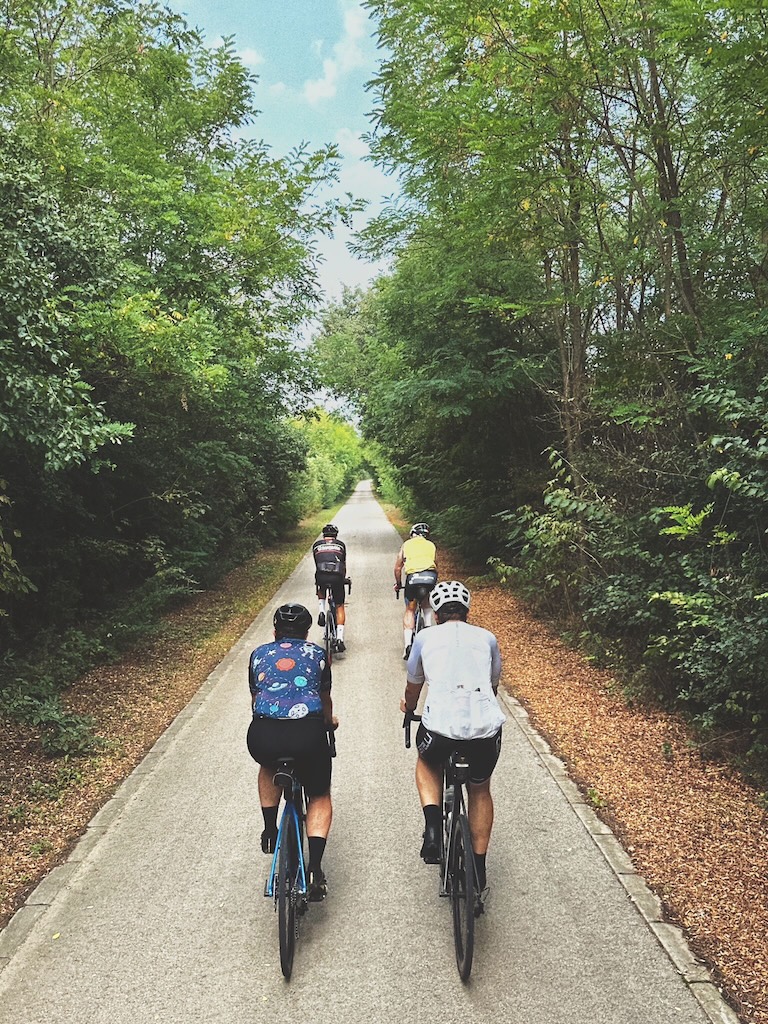
From long mountain climbs and remote border routes to historic trails and Adriatic finishes, cycling in the Balkans is defined by contrast. Languages, food, and landscapes change within a single itinerary reinforcing the sense of travel, making the Balkans one of Europe’s most rewarding regions for multi-day cycling.
The routes below are some of the most memorable ways to experience the region on two wheels. Designed for riders who value terrain, culture, and the journey itself over ticking boxes.
🇷🇴 Transfăgărășan and Transalpina, Romania
Transfăgărășan → Făgăraș Mountains → Făgăraș Fortress → Sighișoara → Biertan → Avrig → Transalpina → Horezu
This Romanian itinerary is built around the country’s two most iconic mountain roads, but it’s the contrast between high-altitude riding and historic lowlands that gives the route its depth. The Transfăgărășan delivers a dramatic introduction, climbing deep into the Făgăraș Mountains on a road famous for its sweeping switchbacks and alpine exposure. From there, the route drops into Transylvania, where medieval towns and Saxon villages slow the pace and reset the rhythm, before the challenge ramps up again on the Transalpina.
Higher, more remote, and more exposed than the Transfăgărășan, it feels like a second act rather than a repeat. The route finishes around Horezu, a region known as much for its ceramics and monastery as for the satisfaction of having crossed Romania’s most dramatic mountain corridors.
This is a tour for riders who want serious climbing without sacrificing cultural depth. Long mountain days are balanced by historic towns, strong regional food, and a sense of traveling across distinct Romanian landscapes rather than riding a single headline road.
Don’t miss:
- The classic hairpins of the Transfăgărășan
- Riding along the Făgăraș mountain range
- Făgăraș Fortress
- Sighișoara’s medieval citadel
- Biertan’s UNESCO fortified church
- The exposed ridgelines of the Transalpina
- Horezu ceramics
For those who prefer a deeper, more seamless experience, we offer a guided version of this tour. It combines lesser-known roads with local knowledge, from hidden food stops and photo locations to the stories and legends behind Transylvania’s medieval past.
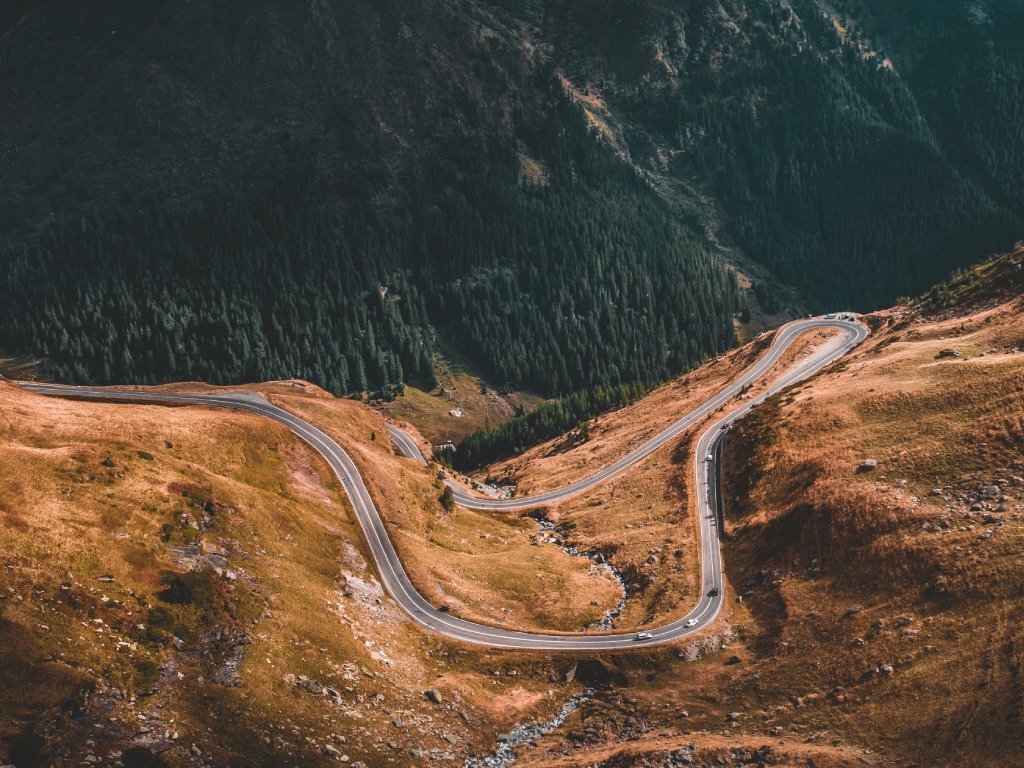
The Transfăgărășan is famous for its 39 hairpins and switchbacks.
🇧🇬 Valley of Kings & Rebels Tour, Bulgaria
Plovdiv → Panagyurishte → Koprivshtitsa → Starosel → Hisarya → Kazanlak
This Bulgarian itinerary blends rolling mountain riding with some of the country’s most historically and culturally significant regions. Starting in Plovdiv, one of Europe’s oldest continuously inhabited cities, the route gradually leaves the lowlands and skirts the Sredna Gora range, linking towns that played defining roles in Bulgaria’s national awakening.
As the route continues east, the focus shifts toward the Thracian Valley. Riding becomes gentler and more open, with vineyards, ancient burial mounds, and spa towns shaping the landscape. Stops around Starosel and Hisarya add a strong wine and wellness component before the route reaches Kazanlak, at the heart of the Rose Valley. If timed for late May or early June, the route passes directly through blooming rose fields, adding a seasonal highlight to an already varied itinerary.
Terrain throughout is hilly but approachable, making the tour well suited to riders who enjoy steady climbing balanced by cultural stops and relaxed evenings.
Don’t miss:
- Plovdiv old town
- Panagyurishte (famous for the Thracian Gold and its role in the Bulgarian Revolution)
- Koprivshtitsa (authentic Bulgarian architecture)
- Starosel wine country
- Hisarya spa town
- Rose Valley
🇲🇪🇦🇱 Transdinarica, Montenegro to Albania
Šćepan Polje → Shkodër
The full Trans Dinarica stretches over 3,400 kilometres across the Balkans, but our favorite section runs from the Tara Canyon to Shkodër. This segment captures everything that makes Balkan cycling exceptional: deep river canyons, high mountain plateaus, remote border regions, and long stretches without traffic.
The riding is demanding, with sustained climbs and rugged terrain, but the sense of scale and isolation is unmatched. Kosovo’s mountain routes and the Bitola–Ohrid section are also standouts, offering a slightly more cultural and food-forward experience alongside the physical challenge.
Don’t miss:
- Rafting on the Tara Canyon
- Long, quiet climbs with almost no traffic in the Durmitor National Park
- Sampling local fish dishes on Lake Skadar
- Approaching Shkodër with the Albanian Alps backdrop
🇦🇱 The Blue Ribbon Trail, Albania
Lake Ohrid → Korçë → Vjosa River → Gjirokastër → Blue Eye Spring → Butrint → Ksamil → Albanian Riviera → Vlorë
The Blue Ribbon Trail takes its name from the waters it follows, linking Lake Ohrid to the Albanian Riviera as it rides alongside Europe’s last wild river, the Vjosa, and passes one of the Balkans’ most striking natural springs, the Blue Eye, along the way.
It begins on the shores of Lake Ohrid, one of Europe’s oldest lakes, with calm riding past the Bay of Bones before crossing into southeastern Albania and climbing gradually toward Korçë. From there, the route drops toward the Vjosa Valley, one of Europe’s last free-flowing rivers, where wide landscapes and quiet roads define the riding.
Historic Gjirokastër marks a cultural turning point, its stone houses and fortress setting the tone before the route detours to the Blue Eye Spring, a deep karst pool whose intense color gives the trail its name as much as its symbolism.
The final stretch shifts toward the coast, passing Butrint’s ancient ruins, the beaches of Ksamil, and the dramatic cliffs of the Albanian Riviera before the decisive climb over Llogara Pass and a long descent to Vlorë.
This is a varied journey that balances inland riding with a strong coastal finish. Terrain ranges from rolling hills to sustained climbing, daily distances are flexible, and the contrast between lake, river, mountains, and sea makes this one of the most visually diverse multi-day routes in the Balkans.
Don’t miss:
- Riding along Lake Ohrid
- The Bay of Bones archaeological site
- Sveti Naum monastery
- Riding alongside the Vjosa River
- Gjirokastër old town and castle
- The Blue Eye Spring
- Butrint UNESCO site
- Coastal riding near Ksamil
- The climb over Llogara Pass
- Descent toward Vlorë and the Adriatic
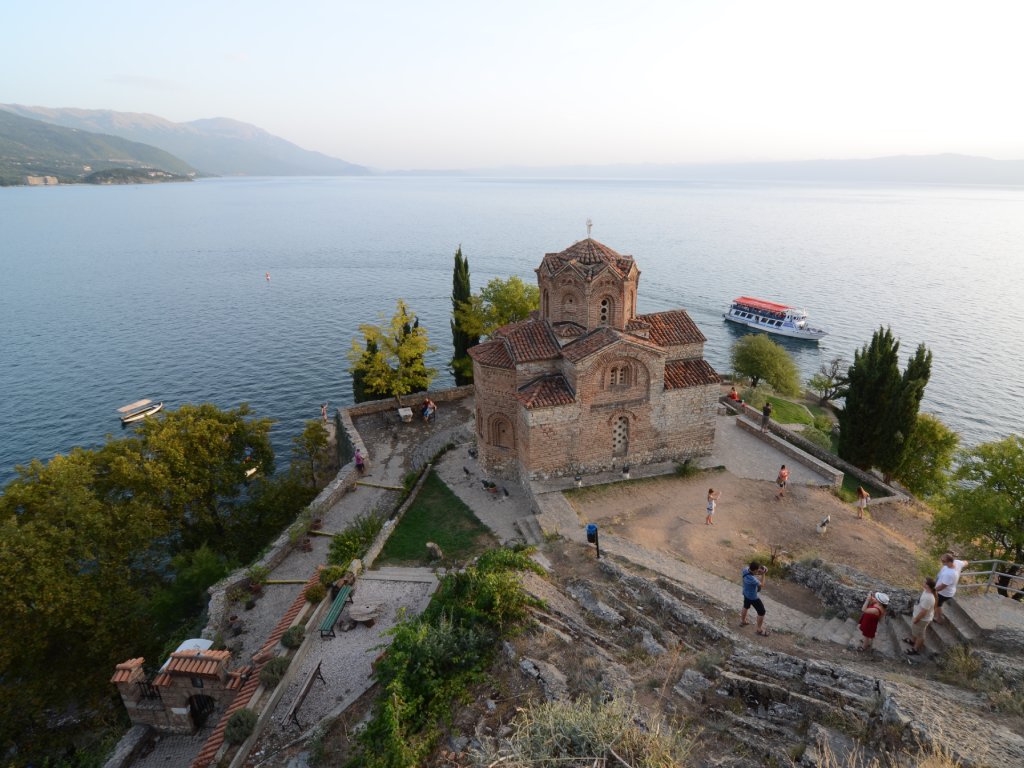
The Albanian Blue Ribbon Trail starts at the shores of Lake Ohrid.
🇧🇦🇭🇷 Ćiro Trail, Bosnia & Herzegovina to Croatia
Mostar → Trebinje → Dubrovnik
The Ćiro Trail follows the route of a historic narrow-gauge railway through Herzegovina, linking Mostar with the Adriatic coast. The trail rolls through karst landscapes, old railway tunnels, vineyards, and small stone villages to the walled-town of Trebinje, before descending toward Dubrovnik.
Gradients are generally manageable, the surface is mostly tarmac with short gravel sections, and the cultural payoff is high. This itinerary is ideal for cyclists looking to combine inland riding with a dramatic coastal finish, strong regional cuisine, and a clear historical narrative along the route.
Don’t miss:
- Mostar old town
- Railway tunnels and bridges along the route
- Trebinje old town and riverside cafés
- Inland approach toward Dubrovnik
- Dubrovnik old town
- Dip in the Adriatic
Why Multi-Day Cycling Works So Well in the Balkans
What connects these routes isn’t just terrain, but variation. For cyclists willing to look beyond the obvious, the Balkans offer some of Europe’s most rewarding multi-day bike tours. Cycling here means moving through genuinely different worlds rather than variations of the same landscape. A single itinerary can take you from alpine passes to lakeshores, from stone-built hill towns to coastal descents, with changes in food, language, and daily rhythm along the way.
Distances here tend to feel earned rather than accumulated. Climbs are long and meaningful, roads are often quiet once you leave the main routes, and evenings are shaped by where you end up rather than how fast you get there. Whether riding through mountain regions, along historic rail trails, or finishing by the Adriatic, the sense of progression is constant.