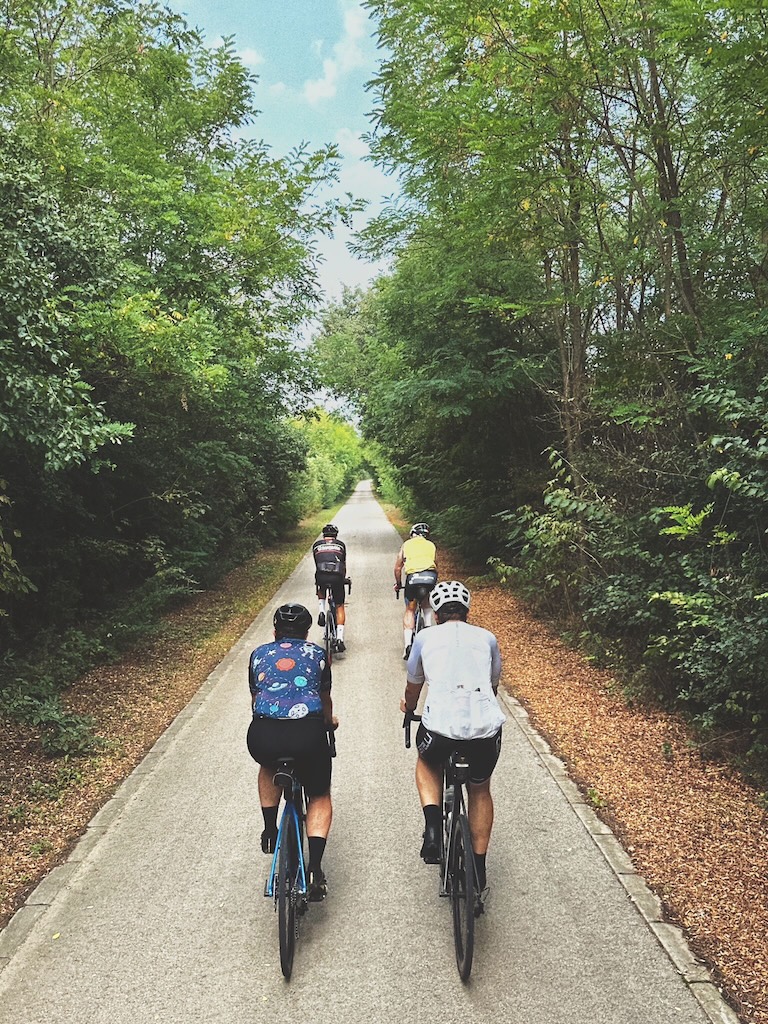
 by Peter Illés on January 8th, 2026
Central Europe doesn’t suffer from a lack of cycling routes. Quite the opposite. With hundreds of well-signed long-distance paths, choosing where to ride can feel harder than the ride itself. That’s why this list is intentionally curated.
For each theme, we highlight one lesser-known favorite we genuinely rate above the more obvious choices, followed by other excellent routes worth exploring. Think of this as an editorial shortlist with routes chosen for atmosphere and the best mix of landscapes, culture, and food.
River Journeys: Cycling Central Europe’s Waterways
🇩🇪🇨🇿 Our pick: Elbe Cycle Route (Elberadweg)
The Elbe Cycle Route begins in northern Czechia, in the Krkonoše (Giant) mountains, before flowing northwest into Germany and gradually widening into one of Central Europe’s most scenic river journeys. The reason the Elbe works so well is how dramatically the landscape changes along the way: narrow valleys and sandstone towers in Saxon Switzerland give way to vineyard-covered hills, baroque cities, and broad river plains as you approach Dresden and beyond.
Long traffic-free sections run directly along the riverbank, while short detours pull you into historic town centers, wine villages, and quiet ferry crossings. The riding is relaxed but never dull, shaped as much by geology, culture, and the river itself. It’s an ideal multi-day route for cyclists who want visual impact, cultural depth, and easy logistics with slightly less traffic than the Rhine Route or the Danube Cycle Path.
Don’t miss:
- The sandstone formations of Saxon Switzerland National Park
- Königstein Fortress towering above the Elbe
- Riverside riding through the Elbe Sandstone Gorge
- Dresden’s baroque old town and riverfront terraces
- Vineyards and wine taverns around Radebeul and Meissen
- Meissen Cathedral and porcelain heritage
- Hartenfels Castle in Torgau
- Lutherstadt Wittenberg, the birthplace of Reformation
- Dessau-Wörlitz Garden Realm (UNESCO landscape design)
- Bauhaus architecture in Dessau
- Magdeburg Cathedral and old town
Other river cycling routes to consider
Rhine Cycle Route (Rheinradweg)
This is castle country: short stages through the Middle Rhine where vineyards climb straight out of the river and every bend seems to reveal another fortress or riverside wine town.
Danube Cycle Path (Donauradweg)
Europe’s best-known cycle route earns its reputation by connecting capitals, monasteries, wine regions, and vast floodplains on an uninterrupted, effortlessly rideable corridor across Central Europe.
Main River Cycle Path (Mainradweg)
The Main slips quietly through Franconia, linking half-timbered towns like Wertheim and Bamberg. Expect lots of market squares, vineyard hills, and relaxed café stops.
Inn Cycle Path (Innradweg)
Fed by glaciers, the Inn cuts a wide alpine valley where snow-capped peaks stay in view while the riding remains calm, and surprisingly gentle.
Havel Cycle Trail (Havelradweg)
Often called the “Blue Paradise”, the Havel wanders through lakes and wetlands north of Berlin, with swimming spots, birdlife, and sandy beaches shaping slow, summery riding days.
Drau Cycle Path (Drauradweg)
The Drau feels southern from the start, following a broad valley where orchards, pastel towns, and warm evenings give the route a distinctly relaxed pace.
Mur Cycle Path (Murradweg)
Starting high in the Alps and drifting toward Styrian wine country, the Mur offers a gradual change in landscape that’s best noticed from the saddle over several unhurried days.
Lahn Cycle Route (Lahnradweg)
An intimate alternative to the big rivers, the Lahn feels slow and romantic, threading castle towns, wooded hills, and café-lined riverbanks that encourage shorter days and lingering stops.
Aare Cycle Route
Switzerland’s Aare route threads together turquoise lakes, old towns like Solothurn, and glacier-fed rivers, all held together by faultless infrastructure that lets the scenery do the talking.
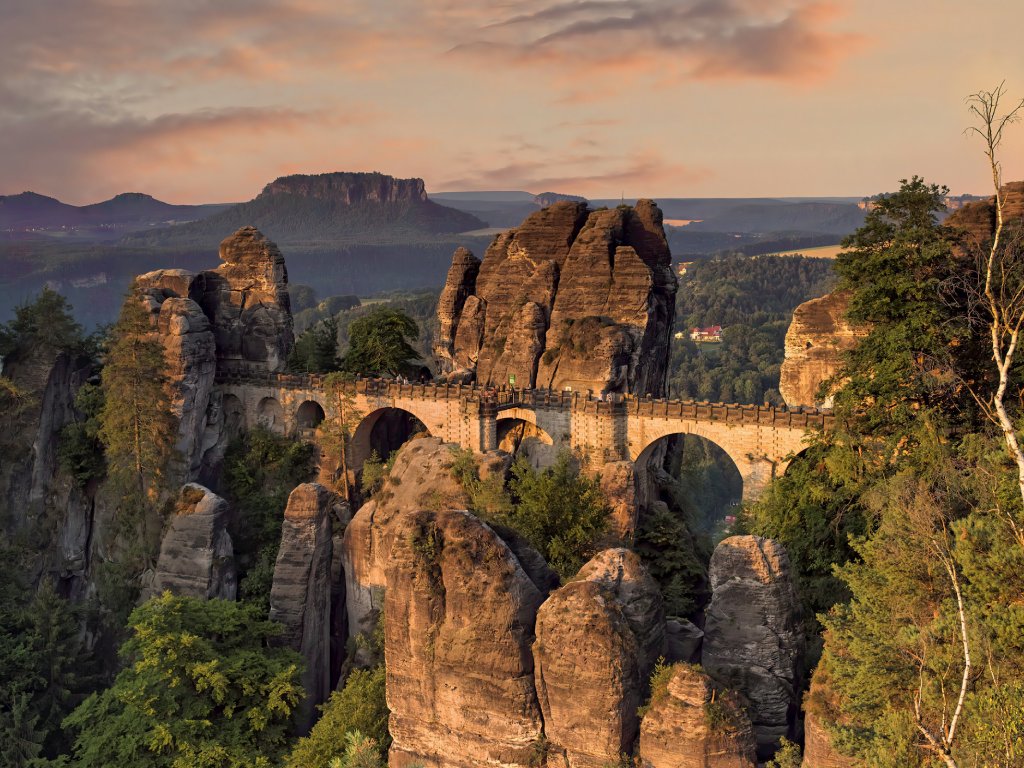
The views in Saxon Switzerland National Park alone make riding the Elberadweg worthwhile.
Wine & Food Routes: Where Riding Meets the Table
🇭🇺 Our pick: Lake Balaton Loop
The Balaton Loop circles Central Europe’s largest lake, weaving together vineyard-covered hills, beach towns, and highland villages where cycling days naturally revolve around meals rather than mileage. While wildly popular with locals, it remains surprisingly under the radar for international cyclists, making it feel both polished and personal at the same time.
The riding is mostly gentle, with short climbs on the northern shore adding texture without ever dominating the day. The defining feature of the Lake Balaton loop is its rhythm: morning swims, café stops along the lake promenade, afternoons rolling through wine villages like Csopak and Paloznak, and evenings that stretch long over shared plates and local whites. It’s a route that rewards curiosity and pacing, not speed.
Don’t miss:
- Stunning views from the Balatonakarattya Magaspart
- Balatonfüred’s historic lake promenade
- Wine villages of Csopak and Paloznak
- Tihany Abbey and peninsula viewpoints
- Szigliget Castle above the western basin
- Basalt hills and vineyards of Badacsony
- Festetics Palace in Keszthely
- Héviz thermal baths
- Kis-Balaton Nature Reserve and birdlife
For those who prefer a deeper, more seamless experience, we offer a guided version of the Lake Balaton loop. It combines lesser-known trails with local knowledge, from hidden food stops and photo locations to family-run wine cellar visits.
Other wine and food cycling holidays to consider
Moselle Cycle Path (Moselradweg)
Could’ve classified the Moselradweg as a river journey, but the tight river bends, steep vineyards, and wine towns where tasting rooms open straight onto the cycle path make the Moselle one of Europe’s premier wine routes.
Weinviertel Weinstrasse
North of Vienna, this gently rolling route links quiet villages, sunflower fields, and the famous Kellergassen, long cellar alleys where wine is poured from family-owned presses rather than menus.
South Bohemian Way
A bit of a cheat, since we traded wine for beer. This Czech route mixes cycling with beer culture, linking Renaissance town squares, castle courtyards, and the birthplace of Budweiser through peaceful countryside. Originally a hiking/pilgrim trail, but it works just as well for cycling.
Traisentalradweg
One of Austria’s most food-focused routes, especially in its lower stretches, the Traisental winds through orchards and vineyards, with frequent stops at Heuriger wine taverns and cozy Stüberl that make even short stages feel perfectly judged.
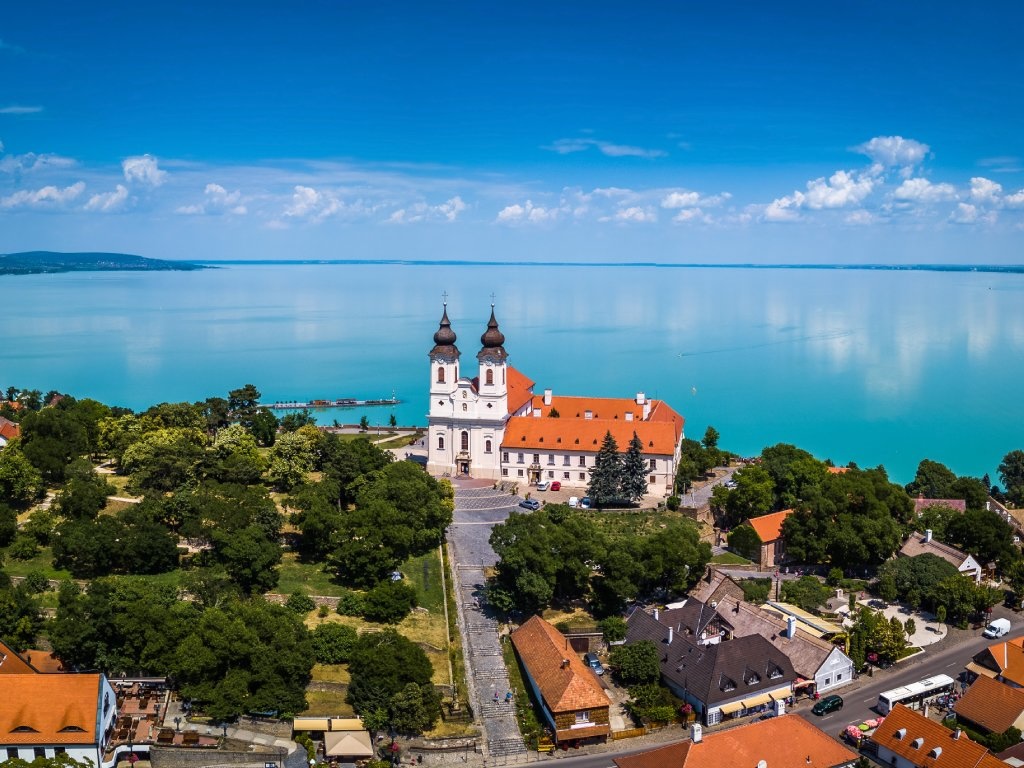
The terrace next to the abbey in Tihany offers spectacular views of Lake Balaton.
Mountain Riding: Big Passes, Bigger Views
🇵🇱🇸🇰 Our pick: VeloDunajec
The VeloDunajec threads through the limestone gorges of the Pieniny Mountains, following the Dunajec River along the Polish–Slovak border before climbing into open alpine terrain with views that feel far bigger than the map suggests. Unlike headline Alpine passes, this route builds drama gradually: wooded valleys, river canyons, wooden villages, then wide mountain horizons where the riding suddenly feels high and exposed.
Climbing is measured, surfaces are excellent, and traffic is minimal, making it a rare mountain experience that remains approachable over multiple days. What sets VeloDunajec apart is how naturally culture and landscape intersect, with castles, raft crossings, and small towns appearing exactly when legs need a break.
Don’t miss:
- The Dunajec River Gorge and its sheer limestone walls
- Pieniny National Park viewpoints
- Traditional wooden architecture in Podhale villages
- Niedzica Castle overlooking Czorsztyn Lake
- Red-roofed town of Nowy Targ
Other high mountain bike routes to consider
Alpe Adria Cycle Route
A true classic that earns its reputation, crossing from the Austrian Alps to the Adriatic through long tunnels, alpine valleys, and a perfectly paced descent toward Italy.
Lakes Route Switzerland
This route stitches together glacier-fed lakes beneath Switzerland’s high passes, where postcard views come around every corner and climbs are steady and meticulously engineered.
Salzkammergut Lakes Route
The Salzkammergut loop is a high-mountain experience defined by backdrop and atmosphere rather than summit chasing, ideal for riders who want alpine scale without committing to full pass crossings. Riding stays mostly in the valleys, but the terrain never feels flat: short, punchy climbs link lakes like Hallstatt, Wolfgangsee, and Attersee, while the Dachstein rises abruptly in front of riders.
Enns Cycle Route (Ennsradweg)
The most rugged of Austria’s river routes, the Enns cuts through narrow gorges and alpine walls where the landscape is sharp-edged and quietly powerful.
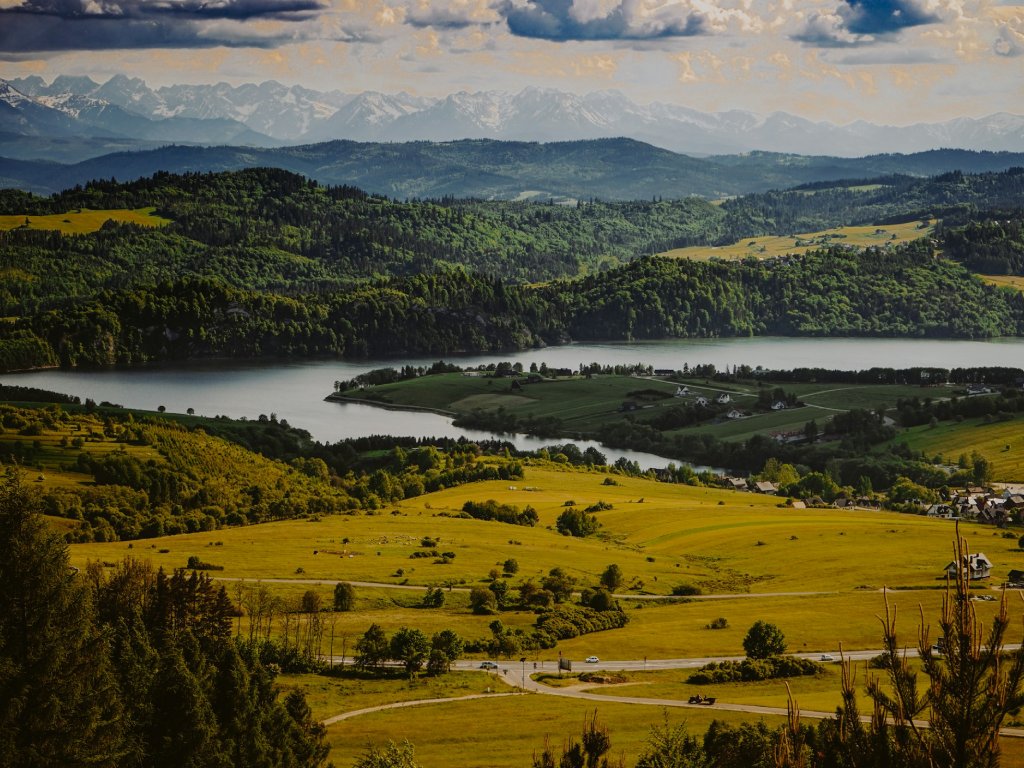
Riding the VeloDunajec rewards you with fantastic views of the Pieniny Mountains. 📸 by Kuba Regulski
Rail Trails: Easy Riding on Historic Lines
🇦🇹 Our pick: Ybbstalradweg (Ybbs Valley Cycle Path)
The Ybbstalradweg follows a former narrow-gauge railway deep into the wooded valleys of Lower Austria, where ironworks once powered the region’s economy and trains were the only way in or out. Today, the line has been reborn as a sleek, gently climbing cycle path that feels purpose-built for long, quiet days in the saddle.
What makes this route stand out is its sense of continuity. Tunnels, bridges, and river bends appear at a rhythm set by 19th-century engineers, not modern tourism, and villages arrive just often enough to keep the journey grounded. Combined with the Traisentalradweg over the Zellerain, it makes for, the best loop in Austria, subjectively.
Don’t miss:
- Old town of Waidhofen an der Ybbs
- Old station building in Opponitz
- A history exhibit about the railway, housed in an old rail carriage in Hollenstein an der Ybbs
- Taking the rail bike for a spin from Lunz am See
- Taking a boat ride on Lunz am see
Other rail trails to consider
Millennium Railway
A spectacular piece of engineering that glides through alpine valleys and the border towns of Slovenia and Italy, combining rail heritage and mountain scenery seamlessly.
Parenzana
One of the best-known gravel routes in Central Europe, the Parenzana winds through tunnels and viaducts above the Istrian peninsula, trading smoothness for atmosphere and dramatic coastal-inland transitions.
Old Railway Trail (Stary Kolejowy Szlak)
A modern conversion cutting through dense forests and lakes, showing how this new Polish rail trail can feel polished without losing appeal.
Bavarian–Bohemian Friendship Trail
Running along the former Iron Curtain, this route blends forest solitude with subtle political history, where old borders have quietly become green corridors.
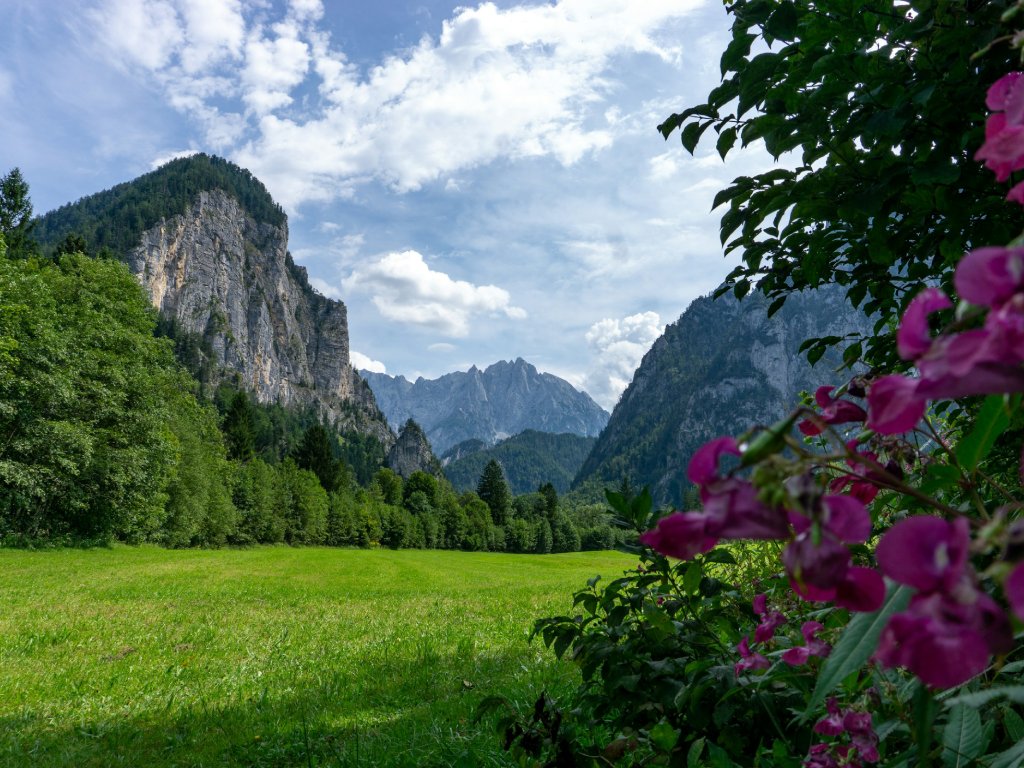
Pedaling through the Ybbs valley offers splendid views of the Alps. 📸 by Eva Darron
Coastal Routes: Where the Ride Ends at the Sea
Lake Constance Cycle Path (Bodensee-Radweg)
Cycling around Lake Constance feels coastal in every sense but name: open horizons, constant water views, harbor towns, and evening swims all shape the rhythm of the ride. The route links Germany, Austria, and Switzerland on flat, flawless paths, with vineyards, ferry crossings, and Alpine backdrops adding depth without adding difficulty.
Velo Baltica (R10)
Pine forests, white-sand beaches, and quiet resort towns define this Baltic route in northern Poland, where the sea appears and disappears rhythmically behind dunes and woodland.
Amber Route
Following an ancient trade corridor, this route blends seaside riding with historic Polish port towns, offering a slower, more cultural take on Baltic coastal cycling.
Cultural Routes: Cycling Through Living History
🇩🇪 Our pick: Thuringian Town Chain (Thüringer Städtekette)
The Thuringian Town Chain links a series of compact, culture-heavy cities across central Germany, where the route passes through places that shaped European thought, music, and design. The route connects Eisenach, Gotha, Erfurt, Weimar, and Jena, following a mostly flat-to-rolling corridor that allows frequent stops without breaking the flow of the ride.
What makes this route special is its density of meaning rather than physical challenge. Bach, Goethe, Schiller, and the Bauhaus movement all have a connection to Thuringia, and the route passes directly through the old towns, market squares, and parks where they left their mark.
It’s an ideal multi-day tour for riders who want to combine easy riding with intellectual and architectural depth, where each stage ends somewhere worth lingering.
Don’t miss:
- Wartburg Castle in Eisenach, where Martin Luther translated the Bible
- Erfurt’s Krämerbrücke and medieval old town
- Weimar’s Bauhaus sites and Goethe-Schiller legacy
- Park an der Ilm in Weimar
- Jena’s university quarter and riverside paths
Other cultural cycling routes to consider
Romantic Road (Romantische Straße)
A classic south–north journey through Bavaria, linking fairy-tale towns and castles, including Rothenburg ob der Tauber and Neuschwanstein, on gently rolling terrain.
Kraków–Bohemia–Vienna Greenway
A long-distance cultural corridor connecting Central Europe’s imperial heartlands through Moravian wine towns, historic border regions, and UNESCO-listed city centers.
Eagles’ Nests Cycling Trail (Szlak Orlich Gniazd)
A dramatic route across southern Poland where medieval fortresses sit on limestone cliffs above forested valleys, giving the riding a strong sense of narrative and place.
Five Rivers Cycle Path (Fünf-Flüsse-Radweg)
A loop through Bavaria that follows the Danube, Altmühl, Pegnitz, Naab, and Vils, linking Roman sites, baroque towns, and classic beer culture.
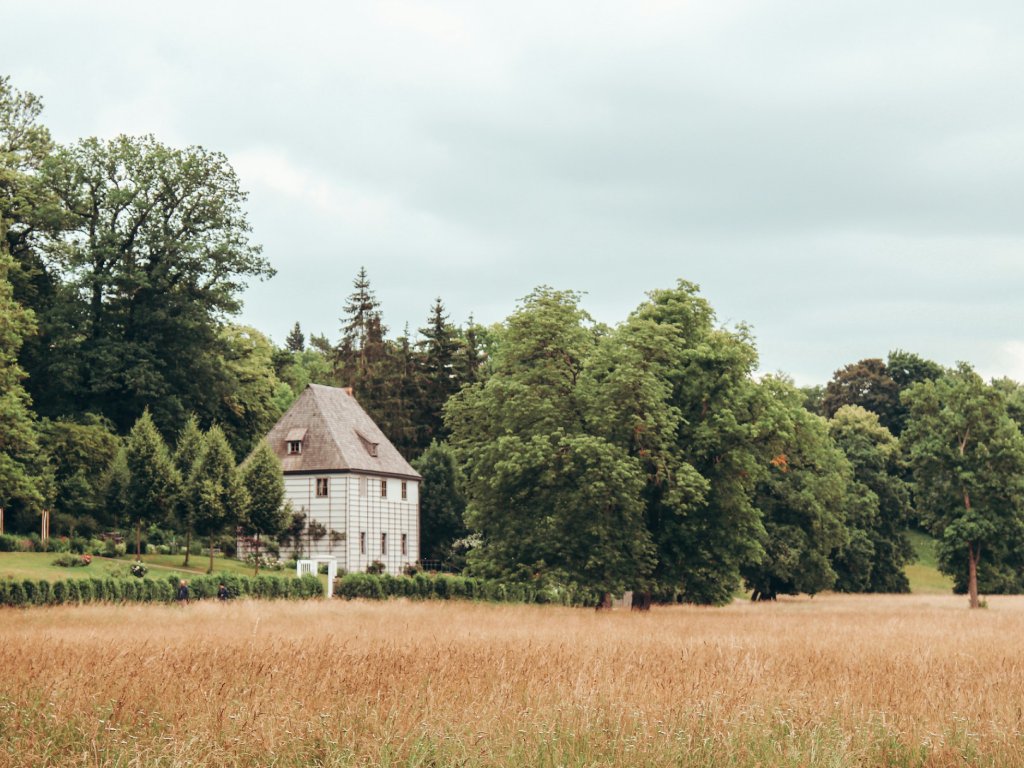
The Thüringer Städtekette takes you through towns of cultural importance, but also quaint countryside. 📸 by Dana Ward
Off the Beaten Path: The Quiet Side of Central Europe
🇸🇮 Our pick: The Emerald Cycling Route
The Emerald Route follows the Soča River through western Slovenia, a region where alpine valleys, karst plateaus, and turquoise water shape both the landscape and the riding. Roads are narrow and lightly trafficked, climbing gently out of river gorges before dropping back toward villages that still feel rooted in daily life.
What sets this route apart is how quickly it moves between environments. One day you’re riding alongside emerald-colored water beneath limestone cliffs, the next you’re crossing high pastures or passing World War I sites tucked into the mountains. Slovenia never fails to amaze us at how much is packed into such a small country, and this route fits the bill!
Don’t miss:
- Riding along the Soča River’s turquoise pools
- Kobarid and the World War I mountain history
- Škocjan Caves (UNESCO-listed underground canyon)
- Postojna Cave and the dramatic setting of Predjama Castle
- Lipica Stud Farm, home of the Lipizzaner horses
- Trying Kranjska sausage (kranjska klobasa) after a long riding day
Other off the beaten path bike routes to consider
Saxon Heritage Trail
A rolling loop through fortified Saxon villages and deep rural Transylvania, where gravel backroads and traditional guesthouses define the pace.
Oder–Neisse Cycle Route
A peaceful border route between Germany and Poland, following two rivers through floodplains, forests, and towns shaped by shifting history.
Amazon of Europe Bike Trail
A surprisingly wild wetland corridor along the Drava, Mura, and Danube, where riding passes through protected biospheres and river jungles.
Seenland Route
An industrial-feeling ride through lakes created from former open-cast mines, blending industrial history with unexpected nature.
Iron Curtain Trail
Hidden Moravian forest roads and former border zones trace the Cold War divide, with minimal traffic and a strong sense of political history.
Jizera Greenway
A gentle route through the Bohemian Paradise region, linking glassmaking towns, sandstone formations, and forested hills.
Saale Cycle Path (Saaleradweg)
Often called Germany’s “canyon of castles”, the Saale runs through steep vineyards and hilltop fortresses with far fewer riders than the Rhine or Moselle.
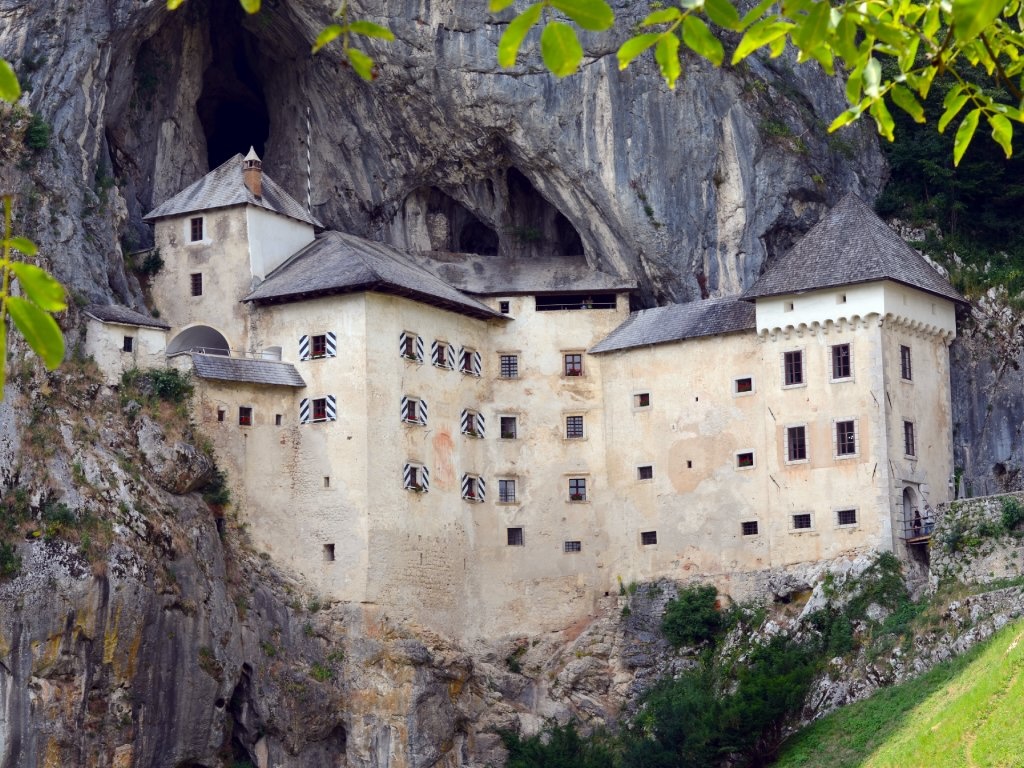
Slovenia punches above its weight: river canyons, high mountains, karst caves and cliffside castles.
Final Thoughts
Central Europe doesn’t lack cycling routes. It has an abundance of them. What matters is choosing the ones that turn well-marked paths into real journeys, where landscapes change gradually, meals anchor the day, and each stage feels distinct.
The routes we’ve highlighted here are the ones that do exactly that. They balance ride quality with cultural depth, avoid unnecessary crowds, and reward curiosity without demanding logistics. Whether you follow rivers, climb into the mountains, trace old rail lines, or drift between wine villages, these are routes that invite you to slow down and stay present.