 by Peter Illés on December 25th, 2025
For cyclists willing to look beyond the usual destinations, Eastern Europe offers some of the most memorable multi-day bike tours in Europe. Routes often link distinct cultural regions, pairing strong riding with local food, history, and landscapes that still feel largely undiscovered.
From medieval Transylvanian towns to Baltic coastlines and remote Caucasus valleys, we selected the most rewarding cycling holiday routes in the region.
🇷🇴 Saxon Heritage Loop, Romania
Sibiu → Biertan → Sighișoara → Viscri → Sibiu
This classic Transylvanian itinerary links some of the most beautiful Saxon villages in Romania using a mix of quiet tarmac and gravel backroads. Starting and finishing in Sibiu, the route strings together UNESCO World Heritage sites, fortified churches, rolling farmland, and wooded hills before reaching Sighișoara, one of Europe’s best-preserved medieval citadels. A gravel-heavy section toward Viscri adds a sense of remoteness and exploration before the loop closes with a fantastic ride along the Făgăraș Mountains.
Daily distances are moderate, terrain is mostly rolling, and the experience is strongly food- and culture-led. Family-run guesthouses, traditional meals, and slow village rhythms make this itinerary ideal for riders who value atmosphere over speed. It’s one of the best introductions to multi-day cycling in Eastern Europe.
Don’t miss:
- Sibiu’s historic old town
- Biertan and Viscri fortified churches
- Sighișoara medieval citadel
- Romania’s best singletrack between Sighișoara and Viscri
For those who prefer a deeper, more seamless experience, we offer a guided version of the Saxon Heritage Loop. It combines lesser-known trails with local knowledge, from hidden food stops and photo locations to the stories and legends behind Transylvania’s medieval past.
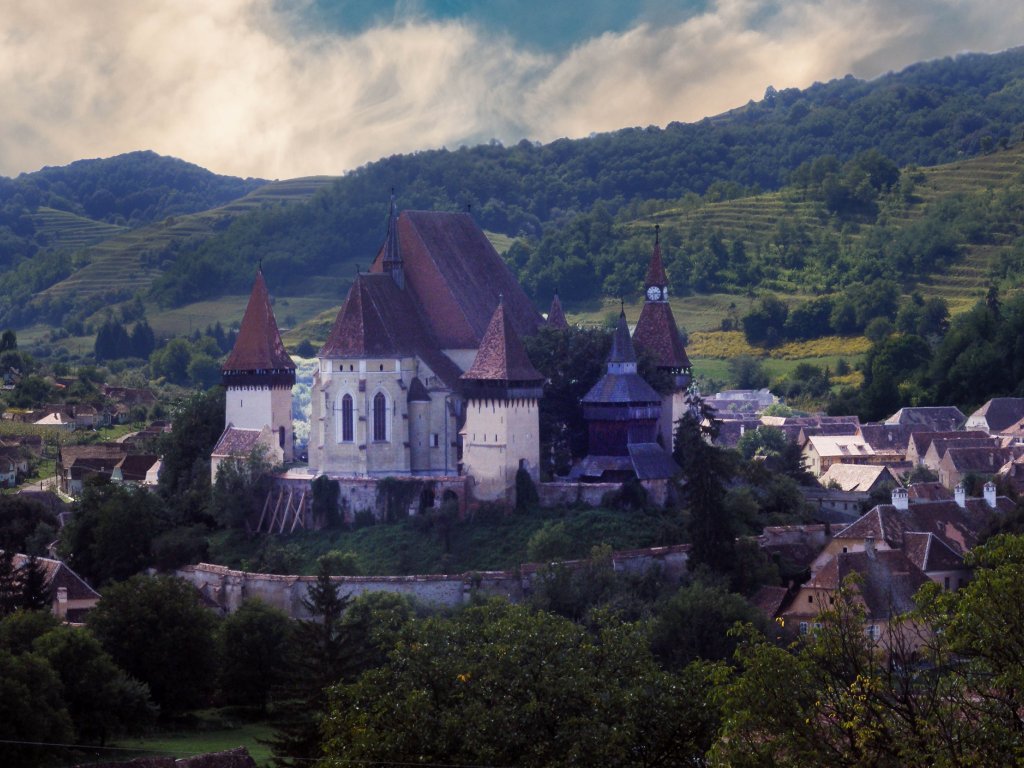
Exploring rural Romania rewards cyclists with hidden medieval gems.
🇧🇬 Valley of Kings & Rebels Tour, Bulgaria
Plovdiv → Panagyurishte → Koprivshtitsa → Starosel → Hisarya → Kazanlak
This Bulgarian itinerary combines history, wine, and rolling mountain terrain in one compact route. Starting from Plovdiv, one of Europe’s oldest continuously inhabited cities, the route flows around the Sredna Gora mountains, passing through towns closely tied to Bulgaria’s revolutionary past such as Panagyurishte or Koprivshtitsa.
The second half of the route flows through the Thracian Valley, with stops near ancient burial mounds, vineyards, and spa towns like Hisarya. Terrain is hilly but manageable, food is generous, and cultural density is high. If you arrive in late May to mid-June, you’ll be able to ride through gorgeous rose fields. This itinerary suits cyclists who enjoy steady climbing paired with history, wine, and relaxed evenings.
Don’t miss:
- Plovdiv old town
- Panagyurishte (famous for the Thracian Gold and its role in the Bulgarian Revolution)
- Koprivshtitsa (authentic Bulgarian architecture)
- Starosel wine country
- Hisarya spa town
- Rose Valley
🇱🇻🇱🇹 Baltic Seaside Route, Latvia & Lithuania
Riga → Kandava → Kuldīga → Liepāja → Klaipėda → Curonian Spit
The Baltic Seaside itinerary is a long, gently paced coastal journey linking historic towns, pine forests, and wide sandy beaches. Beginning in Riga, the route heads west through Kuldīga, known for its waterfalls and wooden architecture, before reaching the coast at Liepāja. Crossing into Lithuania, it continues south toward Klaipėda and the unique landscapes of the Curonian Spit.
The riding is predominantly flat to gently rolling, making this itinerary accessible to a wide range of cyclists. What it lacks in climbing, it makes up for in quiet roads. Long days in the saddle, fresh seafood, and a calm, meditative riding rhythm define this route.
Don’t miss:
- Riga old town
- Kuldīga old town and wooden architecture
- Venta waterfall in Kuldīga
- Long pine-forest stretches
- Liepāja seaside promenade and beaches
- Coastal riding toward Lithuania
- Klaipėda port city
- Riding the dune-and-forest ribbon of the Curonian Spit
🇬🇪 Kakheti Wine Route, Georgia
David Gareji → Udabno → Sighnaghi → Lagodekhi National Park → Gremi → Telavi → Gombori Pass → Mtskheta
Georgia’s Kakheti region delivers one of the most distinctive cycling experiences in Eastern Europe’s wider neighborhood, where riding is inseparable from wine, food, and deep-rooted traditions. The route begins near the semi-desert landscapes of David Gareji, with wide-open views and quiet roads leading through villages where winemaking is still done in clay qvevri buried in the ground. As the terrain softens, the route climbs gently toward Sighnaghi, often called the “City of Love,” perched above the Alazani Valley with sweeping vineyard views.
The second half of the itinerary turns greener and more mountainous, skirting the edges of Lagodekhi National Park before passing historic sites like the Gremi citadel and rolling into Telavi, the cultural heart of Kakheti. The final climb over Gombori Pass provides a satisfying alpine-style ascent before descending toward Mtskheta, Georgia’s ancient capital. Riding days are varied but manageable, and evenings revolve around long, food-filled tables rather than early nights.
Don’t miss:
- David Gareji cave monastery complex
- Udabno desert landscapes
- Sighnaghi old town
- Alazani Valley views
- Traditional qvevri wine cellars in Kakheti villages
- Gremi citadel
- Gombori Pass
- Mtskheta UNESCO World Heritage sites
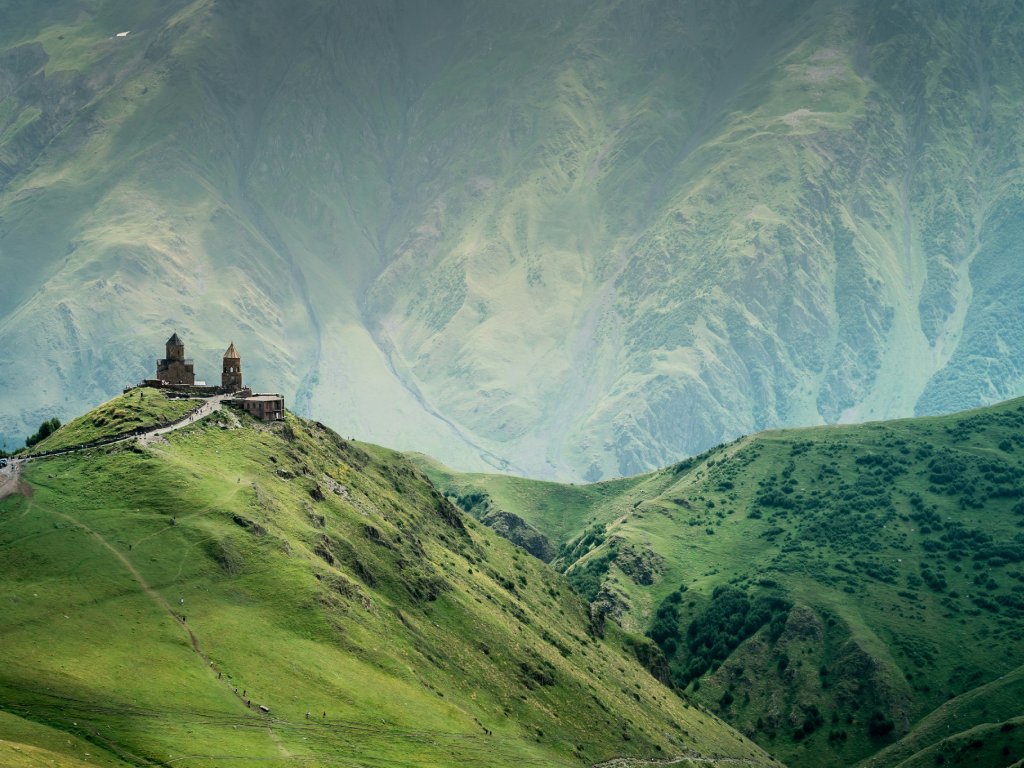
Cycling through rural Georgia reveals quiet monasteries shadowed by the imposing Caucasus Mountains.
🇦🇲 Armenian Highlands Loop
Etchmiadzin → Saghmosavank → Lake Sevan → Dilijan → Selim Pass (Silk Road) → Noravank → Areni → Khor Virap
The Armenian Highlands Loop is a demanding but deeply rewarding multi-day route that blends high-altitude riding with some of the Caucasus’ most striking cultural landmarks. Starting near Etchmiadzin, the spiritual center of Armenia, the route quickly leaves urban areas behind, climbing onto wide plateaus and remote roads framed by volcanic landscapes. Monasteries like Saghmosavank appear almost unexpectedly, set dramatically above deep gorges.
Riding northwest brings cooler temperatures and long, exposed sections before the route turns north into the forested hills around Dilijan. From there, you ride along Lake Sevan, and then through the historic Selim Pass, once part of the Silk Road, before descending into the red-rock canyons around Noravank. The loop closes through Armenia’s wine country near Areni, with Mount Ararat dominating the skyline near Khor Virap. This is a route for experienced riders who enjoy climbing, and a strong sense of place.
Don’t miss:
- Etchmiadzin Cathedral
- Zvarnots Cathedral
- Saghmosavank monastery above the Kasagh Gorge
- Views of Mount Aragats
- Forested climbs around Dilijan
- Lake Sevan shoreline riding
- Sevanavank Monastery
- Noratus Cemetery
- Selim Pass (historic Silk Road crossing)
- Noravank monastery
- Areni wine region
- Mount Ararat views from Khor Virap
Why Multi-Day Cycling Works So Well in Eastern Europe
What unites these itineraries is not just terrain, but contrast. In Eastern Europe, multi-day routes often cross distinct cultural zones rather than repeating similar landscapes. Changes in architecture, language, food, and rhythm reinforce the feeling of real travel rather than staged tourism.
For cyclists willing to look beyond the most established destinations, Eastern Europe offers some of the most memorable multi-day bike tours on the continent. Journeys defined by discovery, hospitality, and routes that feel steeped in history.