 by Peter Illés on December 16th, 2025
Romania is not an obvious bikepacking destination. And that’s precisely why it works so well.
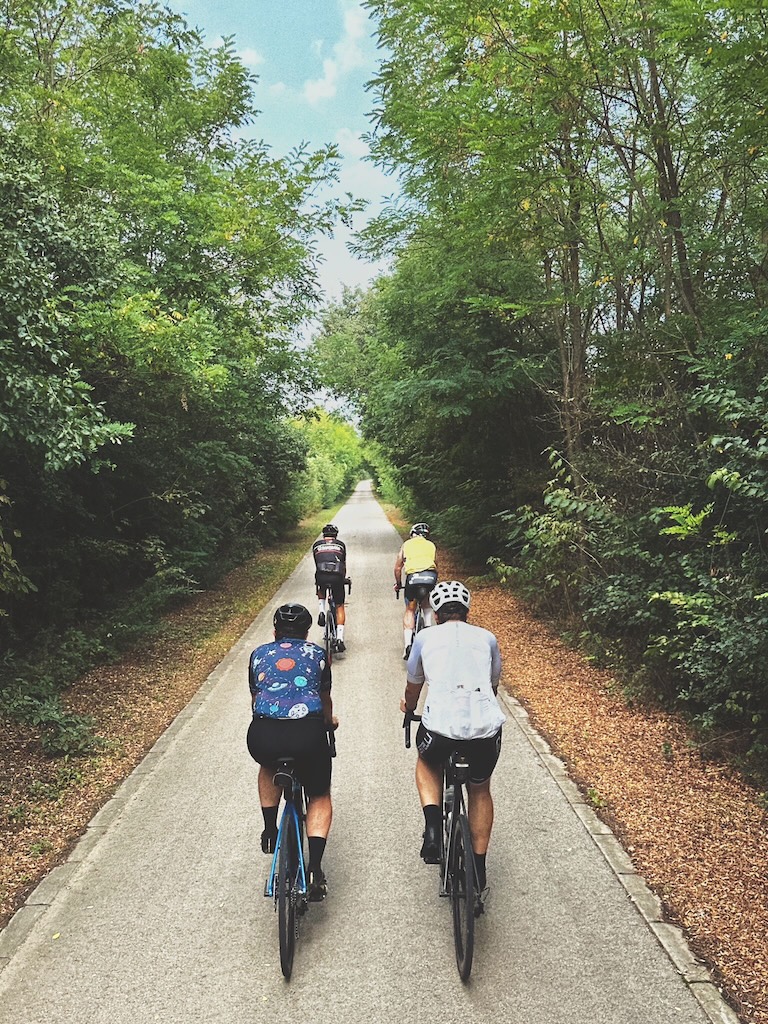
What makes the country stand out is its density of quiet secondary roads and gravel tracks. Outside major corridors, traffic drops off quickly. Many villages are connected by county and local roads that see more horse-drawn carts than cars, and forest roads stretch for kilometres without passing through settlements.
Bikepacking here has nothing to do with earning a stamp in your trail pass. It’s about linking regions, traditions, and landscapes at a human pace. This guide looks at what bikepacking in Romania is really like: where to ride, what kind of routes work best, how to plan, and what practical realities to expect along the way.
Long-Distance Bikepacking Routes in Romania
Via Transilvanica
The Via Transilvanica is Romania’s most ambitious long-distance trail, stretching roughly 1,400 km from the north of the country to the Danube. Riding it end to end is a serious undertaking and would typically take 3 to 4 weeks at a comfortable bikepacking pace.
Fortunately, the route is not meant to be approached as a single, uninterrupted challenge. Via Transilvanica is officially divided into multiple regional sections, each with its own identity, such as Terra Siculorum, Terra Saxonum, Terra Dacica, and others. This makes it much easier to tackle the trail in shorter, more manageable segments, either as standalone trips or combined with other regional routes.
Originally designed as a hiking trail, Via Transilvanica passes through a the quintessential parts of Romania. Along the way, riders encounter medieval castles, Orthodox monasteries, farmsteads in open highland pastures, deep forest trails, UNESCO World Heritage villages, and endless wildflower meadows. The experience is as much cultural as it is physical, with long days that move slowly between distinct historical regions.
As cycling interest grew, the trail organizers also developed a cycling-friendly variant, rerouting certain sections onto more rideable roads and tracks while keeping the spirit and continuity of the route intact. Even so, some rougher surfaces and occasional hike-a-bike remain, depending on the section.
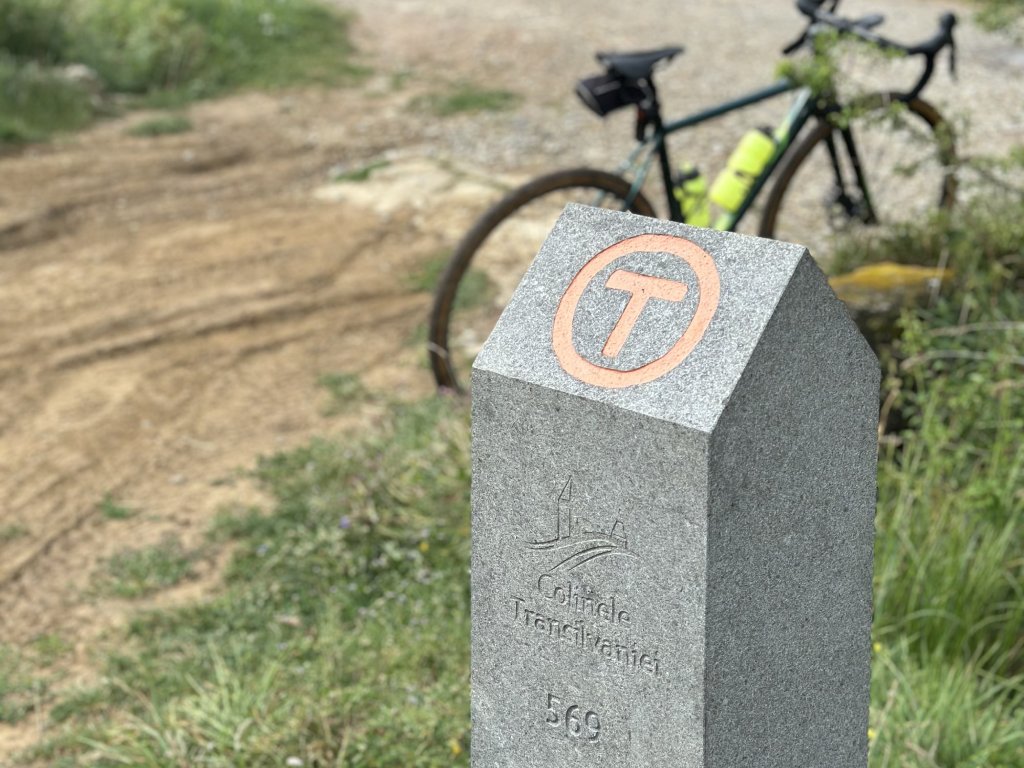
Uniquely carved markers guide you along the Via Transilvanica.
North Romanian Gravel Trail (Baia Mare → Putna)
The Northern Romania Gravel Trail is not an official, signposted route. It’s a 300km long journey I put together over time, linking together gravel roads and forest tracks that I love to ride and that make bikepacking in Romania special. There’s no signage on the ground, and navigation relies entirely on a GPX track and good judgment.
Starting in Baia Mare, the route cuts through Maramureș and Bucovina and ends it Putna, where you can connect to the Via Transilvanica. You can expect tough terrain, beautiful views, and seemingly endless stretches of dense forest. Some days feel remote, even though villages are never truly far away. Surfaces change often, climbs can be steady and draining, and weather plays a big role in how rideable certain sections feel.
This isn’t a polished trail designed for speed or comfort. It’s a route for riders who enjoy being tired in the evening, riding through landscapes that still feel untamed, and stringing together regions that rarely appear on standard cycling itineraries. Done with the right timing and preparation, it offers one of the most immersive bikepacking experiences in Romania.
Transalpina & Transfăgărășan Loop
For riders drawn to big landscapes and epic climbs, linking the Transalpina and Transfăgărășan into a single loop delivers some of the most dramatic riding Romania has to offer. These are not short showcase climbs but long, sustained alpine ascents that take you deep into the Carpathians, followed by extended descents through wide valleys and dense forests.
Both roads sit at high altitude and are closed through winter, usually reopening in mid to late June, which makes timing essential. Once open, they offer cooler temperatures than the lowlands and a sense of scale that’s hard to match elsewhere in the country. The riding is demanding but steady, with gradients that reward patience rather than explosive power.
Although primarily paved, these passes work exceptionally well within a bikepacking itinerary when approached as part of a multi-day loop rather than isolated climbs. Quiet connecting roads allow you to move between regions, overnight in small towns or guesthouses, and experience the mountains as part of a broader journey rather than ticking off famous roads.
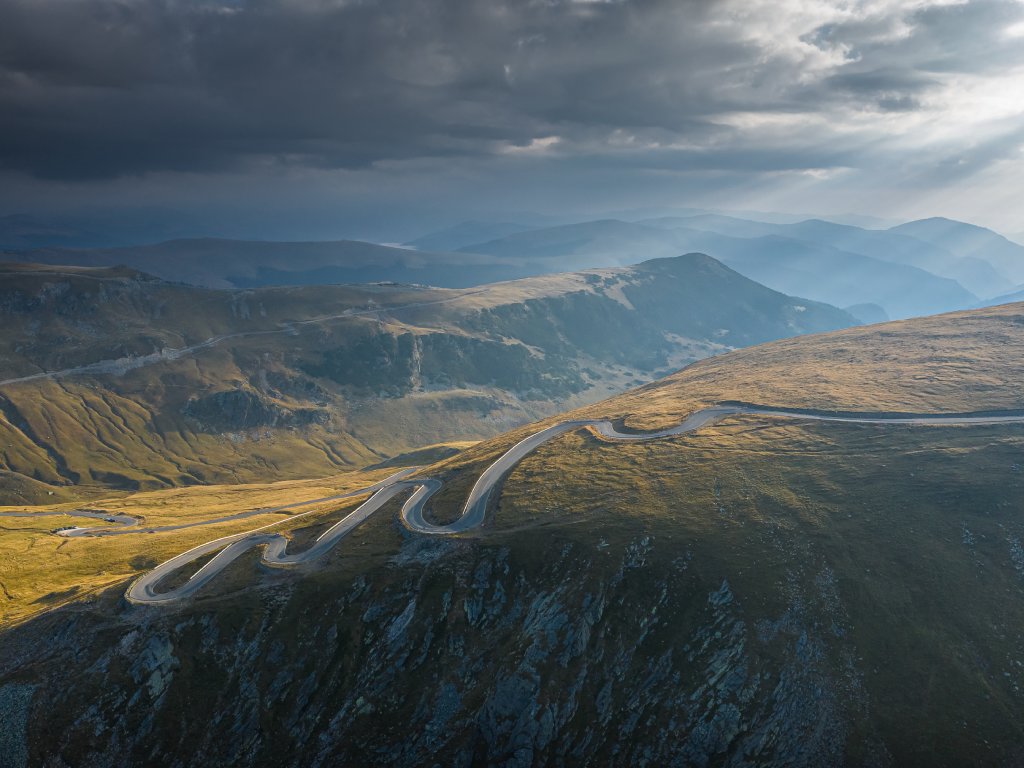
The Transalpina meandering up the Carpathians.
Eurovelo 6
The Romanian stretch of EuroVelo 6 follows the Danube from the Hungarian border all the way to the Black Sea. On paper, it sounds like a dream: a continuous, signposted route along one of Europe’s great rivers. In practice, the experience is mixed.
The highlights are undeniable. The Danube Gorge, where the river cuts through the Carpathians, offers dramatic scenery, steep cliffs, and some of the most impressive river landscapes in the country. At the other end, the Danube Delta is equally special, with wide skies, wetlands, and a sense of remoteness that feels very different from the rest of Romania.
Between these two sections, however, much of the route runs through flat, agricultural terrain that can feel repetitive and visually unremarkable. Infrastructure and surface quality vary, signage is almost non-existent, and long stretches offer little shade or relief from wind and sun. It’s efficient riding, but not always inspiring.
That said, EuroVelo 6 earns its place on this list for a simple reason: people are riding it. As part of a pan-European network, it attracts a steady flow of long-distance cyclists, which brings a sense of continuity and shared experience that other routes in Romania, apart from Via Transilvania, don’t yet have.
When to visit Romania
Timing plays a major role in how enjoyable bikepacking in Romania will be. Late spring and early summer offer a good balance for most regions, with stable weather, long daylight hours, and gravel roads that are generally rideable. High mountain routes only become accessible once snow clears, usually from mid-June onward.
Avoid high-summer, as temperatures soar often reaching 35°C. UV indexes of 8+ are not uncommon. If summer is the only time you are able to travel, hit the gravel trails in the north. Autumn is often the most rewarding season, but be prepared for cooler evenings, especially if you’re camping. Winter and early spring are best avoided for longer trips, as snow, mud, and closed mountain roads can quickly limit route options and flexibility.
Navigation & Preparation
I’ve always relied on Komoot for navigation. Setting it to gravel mode has generally worked very well, but local conditions can change fast. Roads tagged as gravel can become unexpectedly rough, and weather can quickly impact how rideable they are.
Being flexible and ready to adapt your plans makes riding here much more enjoyable. And if all else fails, locals will always steer you in the right direction. They’re surprisingly good at gauging your fitness and technical skills with just a quick look.
Gear Considerations
Romania doesn’t require special equipment, but it rewards durability and comfort. I often ride my gravel bike on 35 mm tires, which works, though that’s very much a personal tolerance for discomfort rather than a recommendation. For most riders, anything over 40 mm offers a much better balance of comfort and control, especially on rough forest roads and broken gravel. Even then, it’s worth being prepared for the occasional push when surfaces deteriorate or weather turns a good road into a muddy one.
Good lights and high-visibility clothing are more important here than in many other cycling destinations. Roads outside towns are rarely well lit, visibility can drop quickly in dense forests or in the rain, and being seen matters. Carrying basic spare parts is also essential, as bike shops are few and far between once you leave cities. The upside is that help is rarely far away. Locals are usually quick to offer a lift for a bit of cash if something goes seriously wrong.
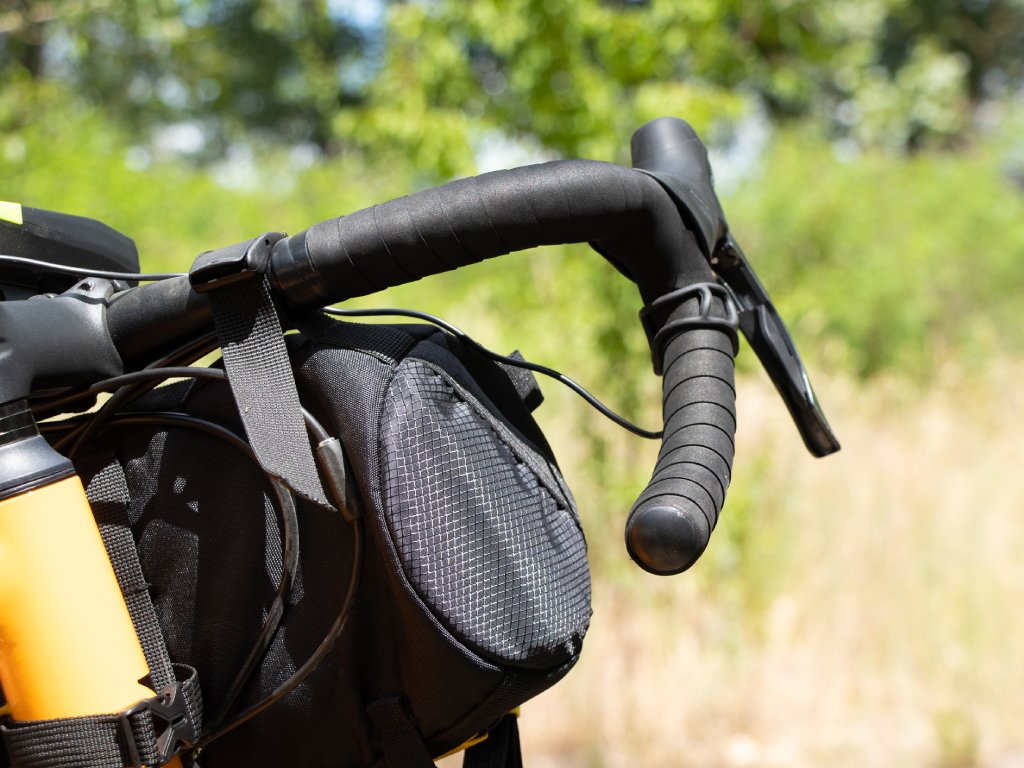
Camping in Romania
While wild camping exists in a legal gray area, it is rarely enforced outside protected areas if done discreetly and respectfully. In many regions, bivouacking or sleeping in a hammock works well thanks to quiet meadows, low population density, and a tolerant attitude toward discreet overnight stays.
That said, Transylvania deserves extra caution. Bear populations are higher here, and while encounters are rare, a tent is the safer option compared to an exposed bivouac or hammock setup. Proper food storage (preferably far from the tent and high up in a tree) and choosing your campsite carefully matter more in this region.
If you’re unsure about a spot, simply asking goes a long way. It’s very common for locals to invite you to set up a hammock or tent in their backyard, often insisting you stay.
There’s always a comfortable alternative as well. Even in remote areas, you’ll usually find family-run guesthouses offering a warm bed and a chance to reset before the next day’s ride.
Starting a small fire is fine, as long as you use common sense. Make sure it’s well away from the forest, be especially cautious during dry periods, and never leave it unattended. Follow these guidelines and you can wrap up your ride with a delicious slice of fried slănină (Romanian bacon).
Safety notes
Cycling safety in Romania is mostly about route choice and awareness. Drivers aren’t used to sharing the road with cyclists, especially outside tourist areas, so avoiding busy national roads. Quiet county roads and forest tracks are where Romania truly shines and where riding feels most relaxed.
Outside of traffic, most safety considerations are situational rather than constant. Stray dogs are common in rural areas but rarely aggressive, and wildlife encounters are uncommon if you camp and store food sensibly. Nevertheless, carrying animal-friendly pepper spray might make you feel more comfortable about shepherd dogs and bears.
Getting Around by Bus and Train with a Bike
Using public transport with a bike in Romania is possible, but not easy. For long-distance buses, operators like FlixBus and Romfour are usually your best bet. That said, in practice I’ve rarely seen buses in Romania equipped with proper bike racks, even when the operator technically allows bikes. A more reliable resource is autogari.ro, which lists domestic bus routes and includes a bike filter, making it easier to see which connections might work.
Trains come with similar caveats. Some CFR (the national railway) services have designated bike spaces, but most don’t, and availability can be inconsistent. You’ll often have better luck with private train operators such as Regiotrans or Interregional, which tend to be more flexible. On short distance or regional trains you might have some luck asking (and sometimes giving a financial incentive to) the conductor. The site mersultrenurilor.ro is particularly useful: under advanced filters, you can select services that allow bicycles, saving a lot of guesswork when planning longer routes.
Final thoughts
Bikepacking (and cycling in general) in Romania comes with challenges, but few are deal-breakers with the right expectations. Whether you explore independently or as part of a guided experience, Romania offers the space and diversity that make bikepacking memorable. The key is choosing the right routes and seasons. Once you do, the country opens up in surprising ways.