 by Peter Illés on December 26th, 2025
Eastern Europe doesn’t advertise its climbs the way the Alps or Pyrenees do. And that’s precisely the appeal. Many of the region’s best ascents combine serious elevation gain with low traffic, raw landscapes, and eye-watering views.
What follows is a curated selection of the most rewarding cycling climbs across Eastern Europe. These are not just hard roads; they’re climbs that shape itineraries, define regions, and turn long days in the saddle into unforgettable journeys.
🇷🇴 Romania
Romania holds the two most legendary roads in the region, known for their high altitudes and sweeping curves. But there’s plenty more for those who are looking for a tough day in the saddle.
Transfăgărășan
Dubbed the "Best Road in the World" by Top Gear presenter Jeremy Clarkson, the Transfăgărășan is a long, dramatic climb that winds through the southern Carpathians with a rhythm that feels purpose-built for cycling. The gradients are steady rather than brutal, allowing you to settle into a tempo as the landscape opens from forested slopes to alpine terrain above the treeline. Traffic can be present in peak summer, but early starts reward riders with one of Eastern Europe’s most iconic ascents. Watch out for bears, especially on the southern side.
Open: mid-June to October
Northern ascent (from Cârțișoara): Length 29.8 km, Avg. gradient 5.2%, Total ascent 1546 m
Southern ascent (from Vidraru Lake): Length 54.5 km, Avg. gradient 3.3%, Total ascent 1820 m
Transalpina (Urdele Pass)
If you thought the Transfăgărășan is hard, the Transalpina is harder. Higher and exposed, the Transalpina feels even more remote and expansive. The climb stretches over open alpine ridges, with long sections where weather, wind, and altitude shape the ride as much as gradient. It’s a defining climb for multi-day routes through the Southern Carpathians and pairs naturally with the Transfăgărășan.
Open: mid-May to October, between 08:00 and 20:00
Northern ascent (from Sebeș): Length 106 km, Avg. gradient 2.6%, Total ascent 2800 m
Southern ascent (from Novaci): Length 27.3 km, Avg. gradient 6.2%, Total ascent 1702 m
Eastern ascent (from Petroșani): Length 45.4 km, Avg. gradient 4.2%, Total ascent 1940 m
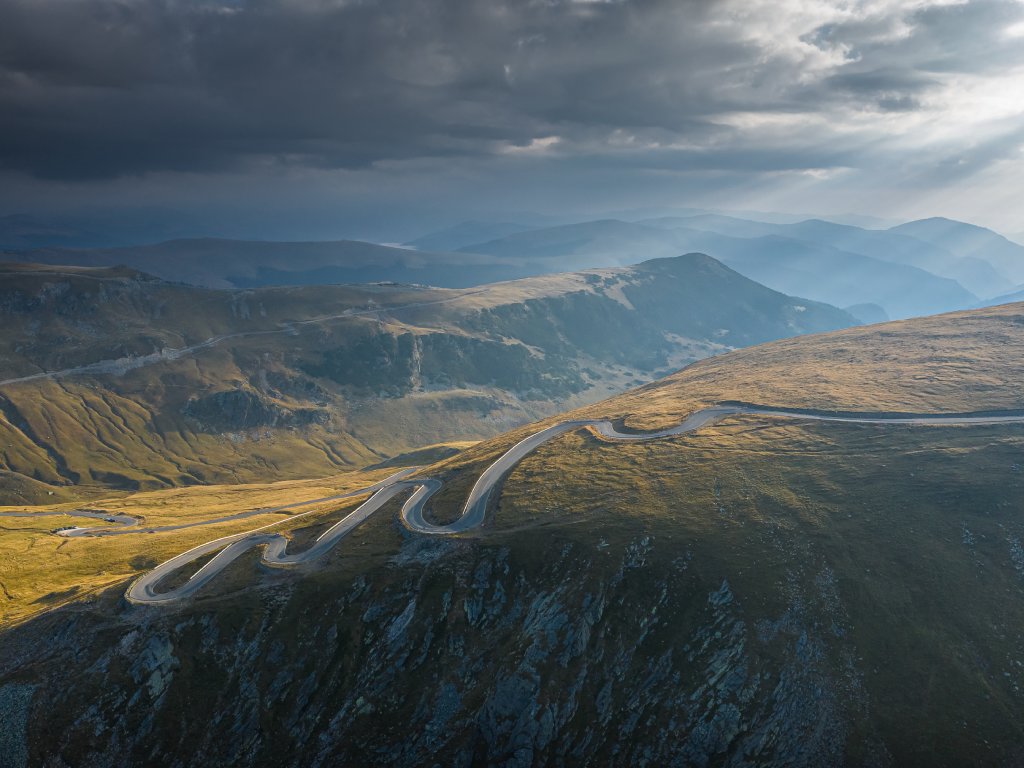
Transalpina pass winding on the mountain ridge in Transylvania, Romania.
Transbucegi / Drumul Babelor
The Transbucegi is one of Romania’s most scenic high-altitude roads, climbing steadily onto the Bucegi Plateau with wide views and a distinctly alpine feel. Gradients are manageable, surface is good, but weather can quickly add difficulty. For those who want more, the optional detour up Drumul Babelor pushes higher toward the iconic rock formations, adding both elevation and drama.
Transbucegi: Length 32.8 km Avg. gradient 3.8% Total ascent 1270 m
With Drumul Babelor: Length 48.6 km Avg. gradient 3.3% Total ascent 1600 m
Transvâlcan
The Transvâlcan is less famous, but arguably more interesting for cyclists who enjoy mixed surfaces. The asphalt climb to the summit is punishing and quiet, with gradients peaking over 20%, while the continuation toward Gorj county transitions onto gravel, opening up a rugged, adventurous descent. It’s also home to an annual cycling race, a quiet nod to the climb’s growing reputation among riders in the know.
Asphalt climb: Length 10.8 km, Avg. gradient 9.2%, Total ascent 1000 m
Transapuseana
Yes, almost every major climb in Romania really does start with Trans. The Transapuseana is less about steep gradients and more about endurance and scenery. The climb rolls steadily through the Apuseni Mountains, linking remote villages, forests, and wide mountain meadows. It’s a long, honest effort where elevation gain accumulates quietly, making it ideal for riders who enjoy sustained days rather than explosive efforts. Traffic is minimal, views are expansive, and the sense of remoteness builds gradually as you go.
Length 74.9 km Avg. gradient 2% Total ascent 1490 m
🇧🇬 Bulgaria
Bulgaria features the highest peaks in the Balkans, providing a great mix of deep forest climbs and high-altitude alpine climbs.
Vitosha
Bulgaria’s most popular climbs, Vitosha rises directly above Sofia, offering a surprisingly wild climb so close to a capital city. The ascent to the ski resort feels continuous and purposeful, and the higher sections deliver wide views over the city below. It’s a classic introduction to Bulgaria’s mountain riding.
Length 15.3 km Avg. gradient 7% Total ascent 1068 m
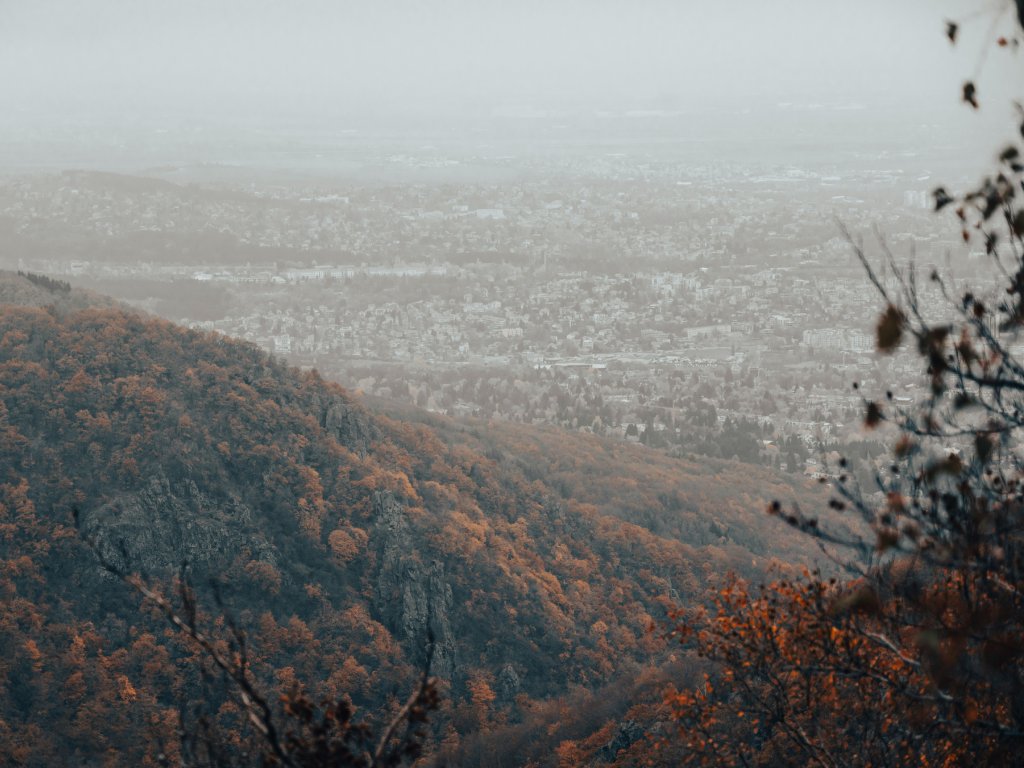
Sofia, as seen from the Vitosha mountain. 📸 by Yoanna Yordanova
Rila (Kalin Dam)
Long, steep, and distinctly alpine. Forested lower slopes gradually give way to open mountain scenery, with gradients that reward explosive power. The surface is broken up, and has several gravel sections, but the views at the top near Kalin Dam are worth it. Preferably use a gravel bike with wide tires and take it slow on the descent.
Length 16.3 km Avg. gradient 11.1% Total ascent 1812 m
Botev Peak (Yumrukcha)
For gravel riders, Botev Peak (previously called Yumrukcha) is a true test. Named after poet and revolutionary Hristo Botev, it’s characterised by rough surfaces, sustained climbing, and rapidly changing weather. It’s less about speed and more about commitment, rewarding riders with isolation and panoramic views that feel far removed from paved Europe.
Length 26.4 km Avg. gradient 6.2% Total ascent 1650 m
🇬🇪 Georgia
Georgia is a paradise for riders who enjoy long, irregular climbs and a mix of asphalt and gravel. Roads often follow deep valleys before rising sharply into high mountain passes, where scenery, isolation, and changing surfaces define the challenge as much as gradient.
Svaneti Road
The road into Svaneti is one of Georgia’s most iconic cycling climbs. Starting near Jvari, the route follows the Enguri River past the massive Enguri Dam before tightening into a long, steady ascent toward Mestia. Gradients are mostly forgiving, but the length, altitude gain, and sheer scale of the valley make this a serious undertaking. Snow-capped peaks and medieval Svan towers provide a backdrop that feels far removed from anywhere else in Europe.
Length 82.7 km Avg. gradient 2.9% Total ascent 2440 m
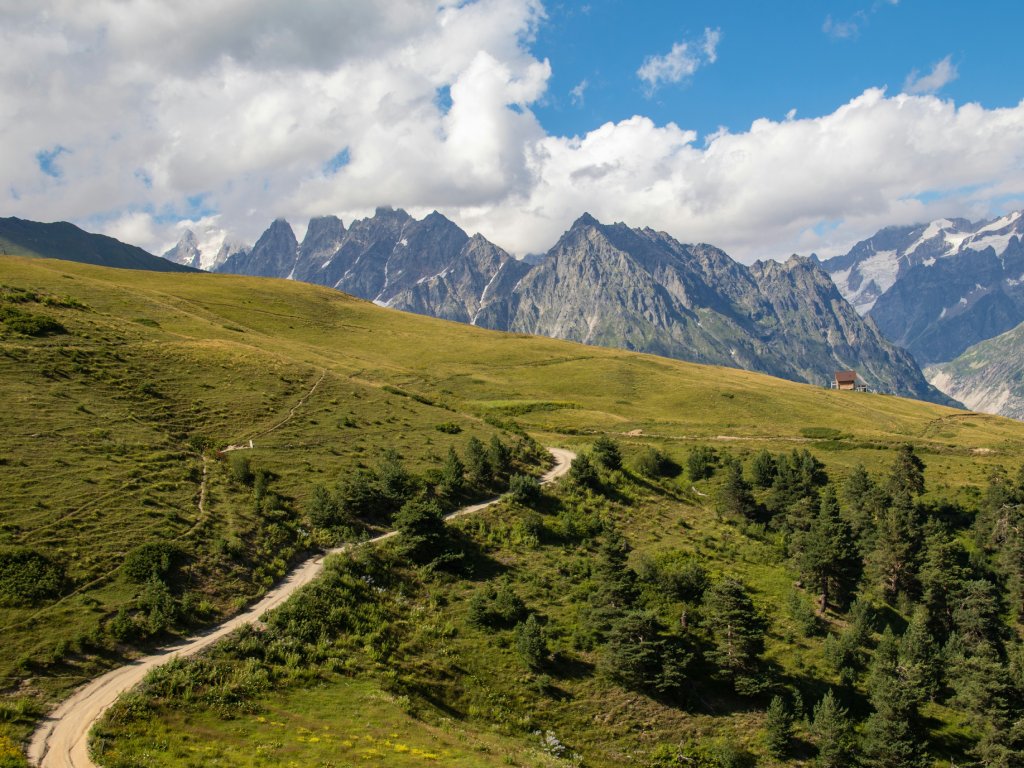
Cycling in the Svaneti region guarantees epic scenery. 📸 by Aleko Kezevadze
Gombori Pass
Shorter and more contained, Gombori Pass connects Telavi with central Georgia and serves as a classic road climb into the Kakheti region. The ascent is steady and well-paced, making it accessible while still rewarding. It’s often paired with wine-country riding, turning a solid climb into part of a broader, food-led itinerary.
Length 22.7 km Avg. gradient 4.6% Total ascent 1040 m
Abano Pass
The Abano Pass is one of the wildest climbs on this list. Almost entirely gravel, it climbs relentlessly from Pshaveli to Omalo, cutting deep into the Greater Caucasus. Weather can change rapidly, surfaces are rough, and commitment is required. The reward is a true sense of isolation and some of the most dramatic mountain scenery in the region. This is not a climb for ticking boxes; it’s a full expedition on two wheels.
Length 68.8 km Avg. gradient 4.2% Total ascent 2950 m
Zekari + Goderdzi Passes
This is a combination of Georgia’s two famous mountain climbs. Zekari Pass delivers a long, demanding ascent with significant elevation gain. Goderdzi follows up with a shorter but equally rewarding climb into alpine terrain. Around a fifth of the route is gravel, adding complexity and adventure. Together, they form a big-mountain day that defines multi-day riding in western Georgia.
Zekari pass: Length 47.3 km Avg. gradient 4.5% Total ascent 2164 m
Goderdzi pass: Length 24.1 km Avg. gradient 4.2% Total ascent 1010 m
Zagari Pass
Less polished and more unpredictable, the Zagari Pass climbs through remote valleys where road conditions vary constantly. Expect a mix of asphalt, broken surfaces, and gravel. What it lacks in smoothness, it makes up for in atmosphere, with quiet villages, steep valley walls, and a strong sense of traveling through a working mountain landscape.
Length 92.9 km Avg. gradient 2.8% Total ascent 2660 m
🇦🇲 Armenia
Armenia’s climbs are defined as much by history, than by altitude. Roads often rise onto wide plateaus before cutting through dramatic gorges, with monasteries and Silk Road relics appearing where you least expect them.
Mount Aragats
If your goal is to climb as high as possible on asphalt in the Caucasus, Mount Aragats delivers. The road climbs steadily up the slopes of Armenia’s highest mountain, with thinning air and widening views increasing the sense of scale. Gradients are consistent, but altitude and exposure make this a serious effort, especially in changing weather.
Length 24.9 km Avg. gradient 6.8% Total ascent 1710 m
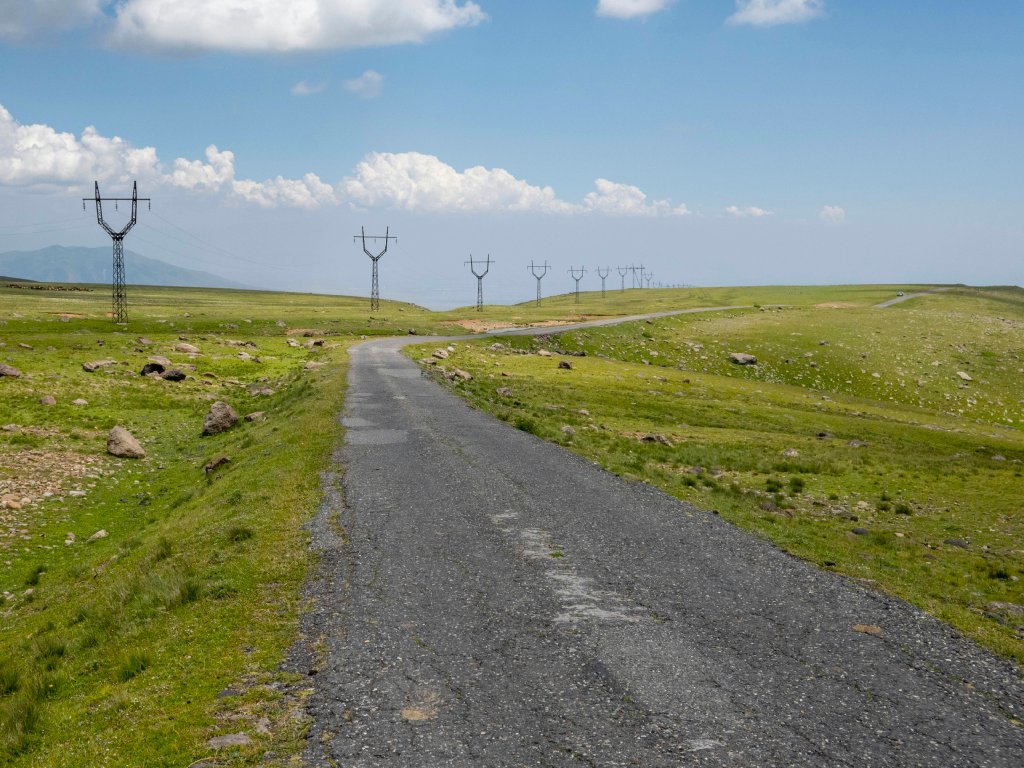
The tarmac road leading up to Mount Aragats. 📸 by Nikolay Werner
Selim (Vardenyats) Pass
Once part of the Silk Road, the Selim Pass is a historically rich and beautifully paced climb. Approaching from Yeghenadzor gives you the best experience, with steady gradients and expansive views toward Lake Sevan. Near the summit, the 14th-century Orbelian Caravanserai still stands as a reminder of the route’s trading past.
Length 27.5 km Avg. gradient 4.6% Total ascent 1270 m
Old Dilijan Road
The old road between Dilijan and Lake Sevan offers a quieter, more atmospheric alternative to the modern tunnel bypass. Gradients are gentle, the forested surroundings are calm, and the descent toward Lake Sevan feels earned rather than rushed. It’s not the hardest climb in Armenia, but it’s one of the most pleasant.
Length 27.7 km Avg. gradient 3.4% Total ascent 950 m
Final Thoughts
For riders willing to look beyond the usual cycling hotspots, Eastern Europe’s best climbs are shaped less by fame and more by context. They unfold through landscapes where cycling still feels like travel rather than performance. Quiet roads, raw scenery, and a sense of discovery. True hidden gems with so little traffic that writing about them almost feels like giving away a secret.