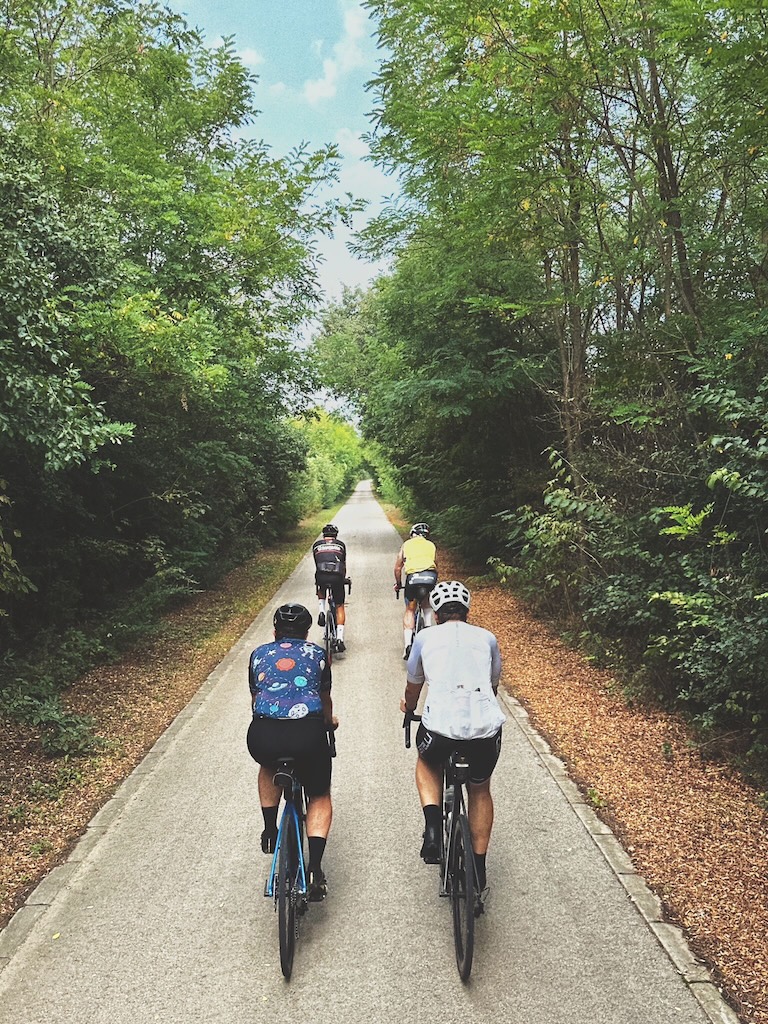
 by Peter Illés on December 18th, 2025
One of the quiet pleasures of cycling through Romania is what you eat along the way. Food here is deeply tied to place, season, and rural life, and traveling by bike puts you right in the middle of it.
If you’re planning a bike trip in Romania, this guide walks you through the dishes cyclists actually encounter: what shows up at lunch stops, what fills plates at dinner, and which local sweets and drinks are worth slowing down for.
Our relationship with heavy foods
On our tours, we often joke the we have a very unapologetic relationship with animal fat. We spread goose or pork fat (untură) on bread, sprinkle it with onions and paprika, and call it a perfectly acceptable snack. We cure and smoke it into slănină, slice it thick, and eat it as-is. We fry it down into crunchy jumări (greaves), and if that’s not enough, we’ll happily grind those greaves into a spread and put them back on bread again.
In truth, we just don’ like to waste any of it since back in our grandparent’s time, resources were scarce. It may sound excessive, but believe me, after a long day on the bike, it suddenly feels less like indulgence and more like sound nutritional planning.
Breakfast: Savoury and Sometimes Unexpected
Breakfast on a cycling trip in Romania is usually practical rather than light. In most guesthouses, you’ll start the day with a generous spread of cheese, cured meats, fresh bread, eggs, and homemade jams, often accompanied by strong coffee or tea. It’s the kind of breakfast designed to keep you going for hours, not just until the first café stop.
Zacuscă, a spread made from roasted eggplant, peppers, and tomatoes, appears frequently, especially in autumn. It’s usually homemade and served with fresh bread.
That said, Romanian breakfasts don’t always follow Western expectations. Especially in rural areas, where they cook with what they have in the garden. Don’t be surprised if your breakfast plate includes something like a green bean and garlic stew, particularly in regions like Maramureș, where hearty, home-style cooking takes precedence over meal-time conventions.
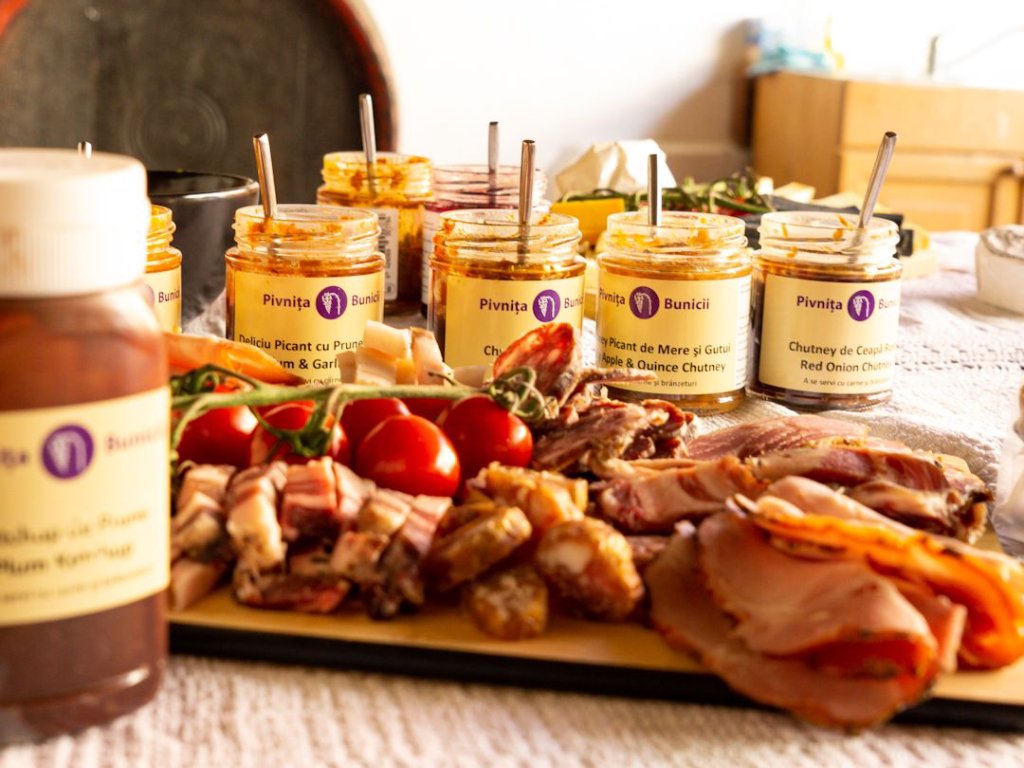
Pivnita Bunicii is a favorite stop on our tours for a wide selection of cheeses, meats and spreads. 📸 by pivnitabunicii.com
Bakery Stops & Quick Lunches
Lunch breaks on a bike trip in Romania are often spontaneous, built around what you find in villages rather than what you planned in advance.
Bakeries are few and far between in rural areas, but if you stumble upon one, look for plăcinte, a type of pastry filled with cheese, potatoes, apples, or cabbage, perfect for a quick stop. In areas with Hungarian influence, you’ll often find lángos, fried dough topped with sour cream and cheese. Merdenele, flaky pastries usually filled with cheese, are another reliable option.
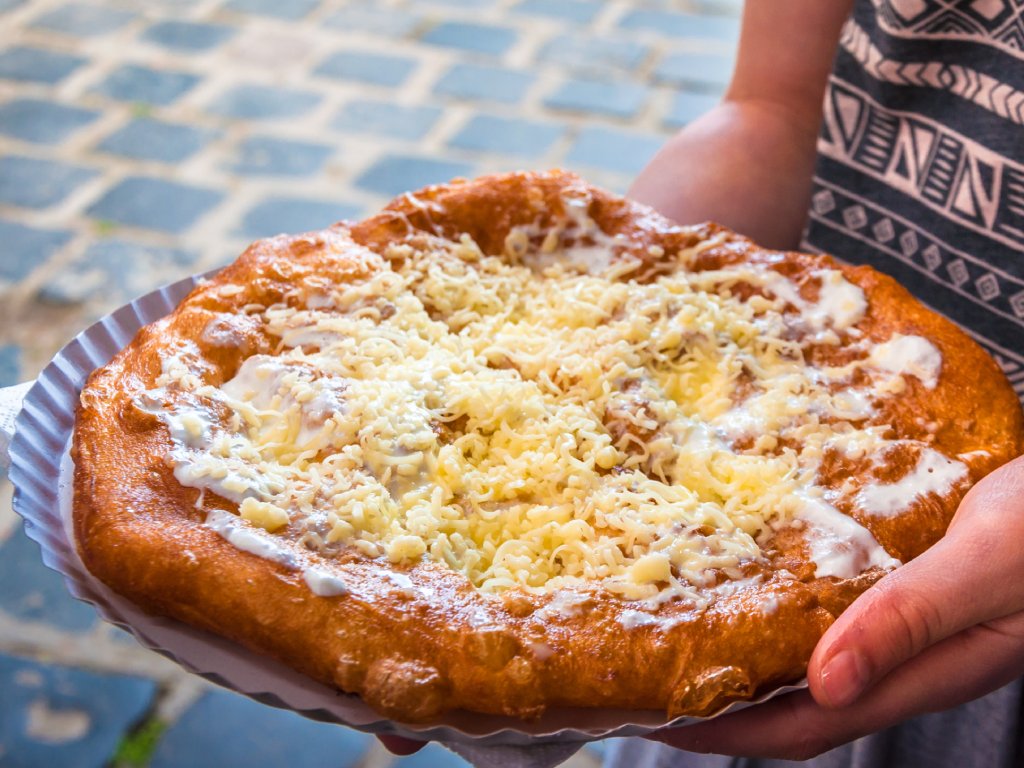
Lángos has Hungarian origins, but nowadays you can find it across the country.
Soups: The Backbone of a Cycling Day
If there’s one thing you’ll eat everywhere in Romania, it’s ciorbă. This family of soups forms the backbone of everyday cooking and is especially well suited to cycling: warm, hydrating, salty, and filling without being heavy.
Ciorbă is defined by its sour base, traditionally made with vinegar, fermented wheat bran (borș), or pickled vegetables. Almost every region, and every household, has its own version.
In Transylvania, ciorbă de legume (vegetable soup) is common, especially in rural guesthouses. It’s simple, seasonal, and often built around whatever is growing locally at the time.
A favorite across the country is ciorbă de perișoare, a light soup with pork or beef meatballs, vegetables, and herbs. It’s one of the most universally loved dishes and a frequent lunch option after a morning in the saddle.
More divisive, but iconic, is ciorbă de burtă (tripe soup), generally considered to originate in Wallachia. Rich, creamy, garlicky, and usually topped with sour cream and vinegar, it’s either a revelation or a challenge, depending on your tastes.
Ciorbă rădăuțeană is one of Bucovina’s most beloved dishes and a great example of how regional Romanian cuisine adapts tradition. Instead of tripe, it uses chicken, but keeps the same creamy, garlicky base, finished with sour cream and a touch of vinegar or lemon for acidity. The result is rich but balanced, comforting without being overwhelming.
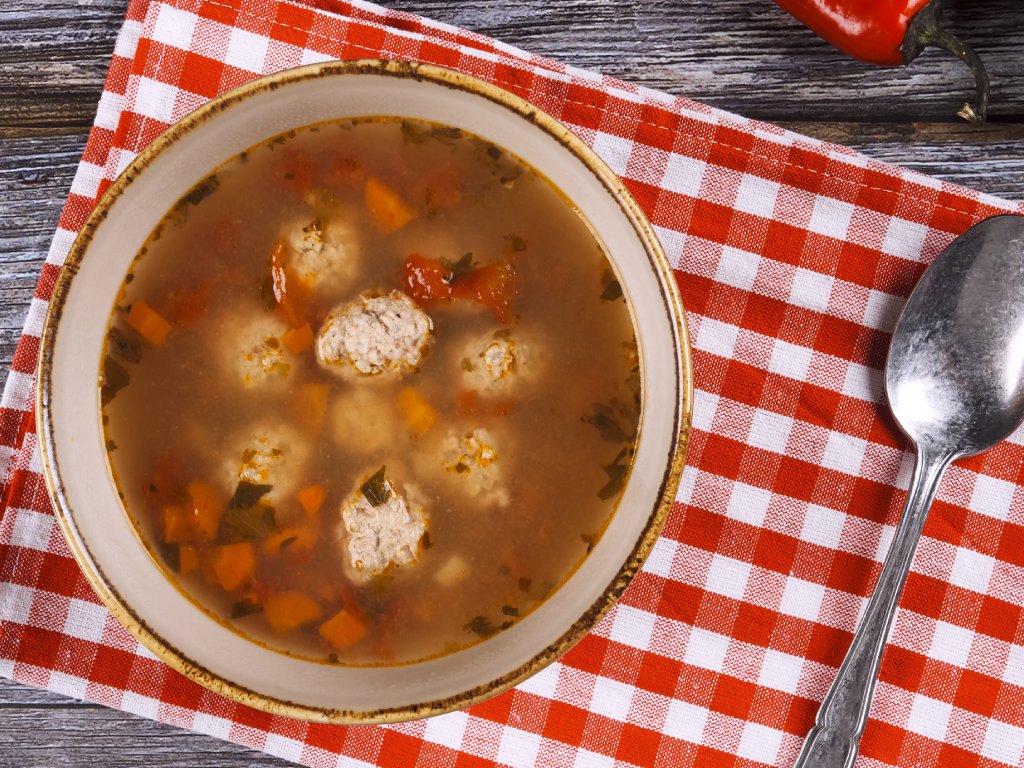 Ciorbă de perișoare
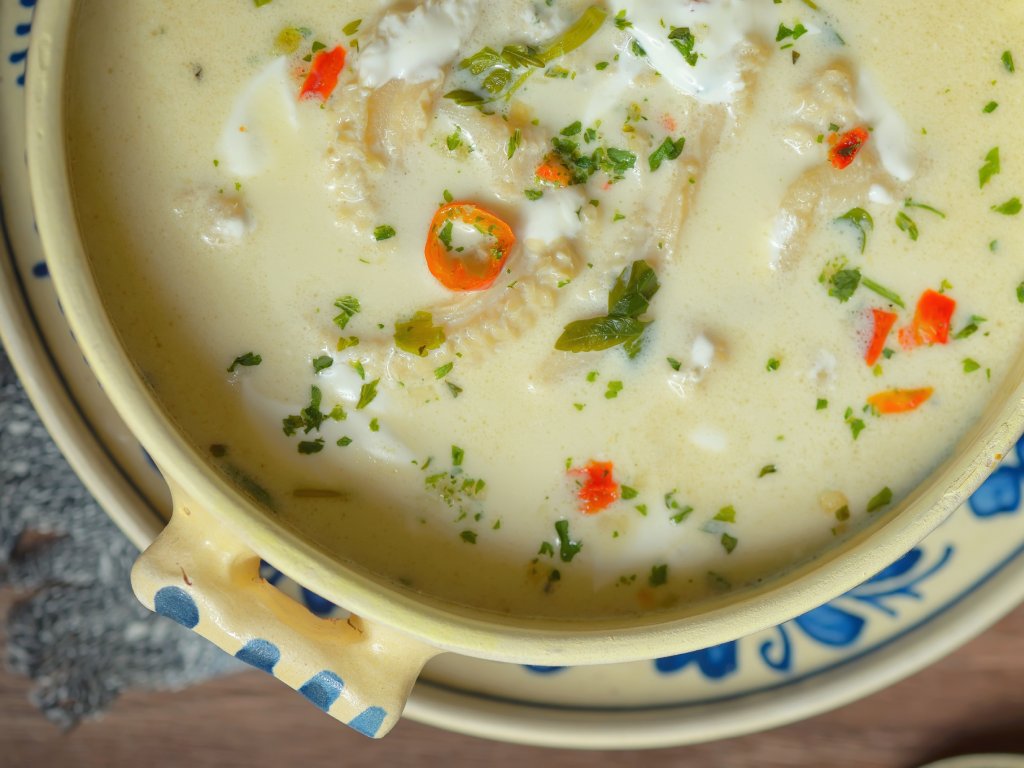 Ciorbă de burtă
Main Dishes: Hearty Food for Long Days
Romanian main dishes are built around the realities of rural life: physical work, cold winters, and feeding many people well. That makes them well suited to multi-day cycling.
Sarmale, which are cabbage rolls filled with meat and rice, are the most famous example. Every Balkan country claims them, and every Romanian region prepares them differently. In Transylvania, influenced by Hungarian cooking, they’re often wrapped in sour cabbage. Further south, Romanian versions tend to be slightly sweeter, simmered in tomato sauce. Either way, they’re deeply satisfying after a long ride.
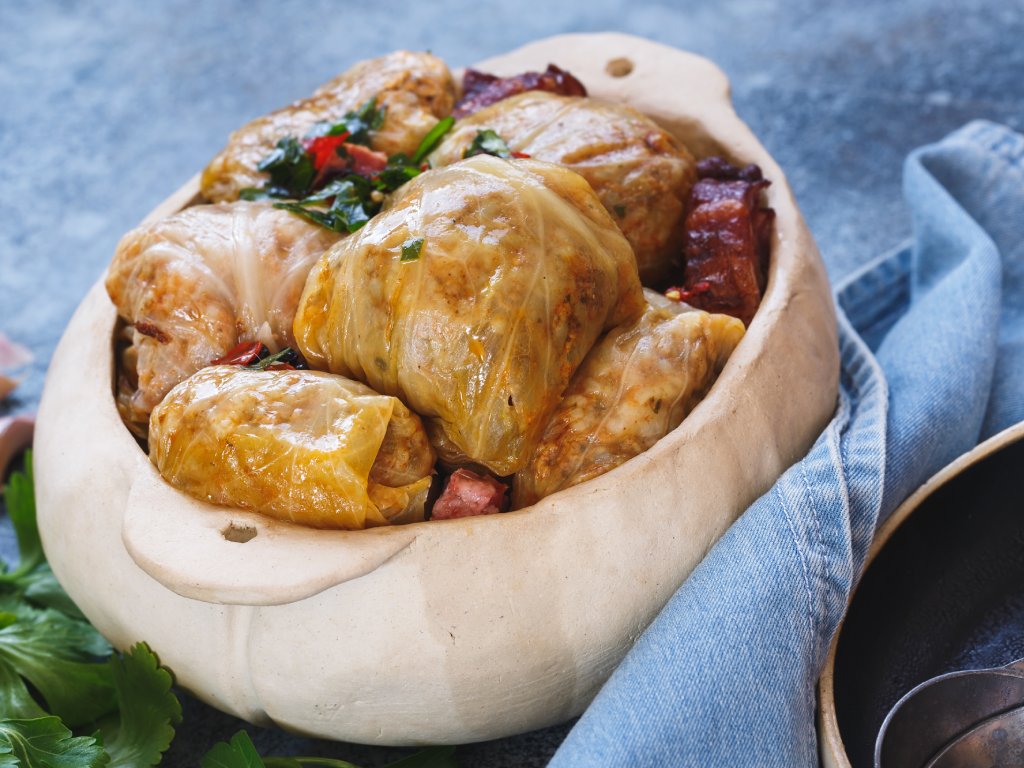
Sarmale, Romania’s version of cabbage rolls.
Another staple is tocăniță, a slow-cooked stew that varies endlessly depending on region and season. Pork, beef, chicken, vegetables, whatever is on hand becomes the centrepiece of the meal.
You’ll also encounter mici (or mititei), grilled skinless sausages similar to ćevapi but usually made from a mix of meats (and baking soda) and heavily seasoned. They’re common at roadside grills and make for an easy, protein-rich lunch or early dinner.
No discussion of Romanian food is complete without mămăligă, the country’s version of polenta. Served soft or firm, plain or layered with cheese and sour cream, it’s a constant companion to stews and meats. In its heartiest form, it becomes bulz: mămăligă stuffed with cheese and baked or grilled into a full meal.
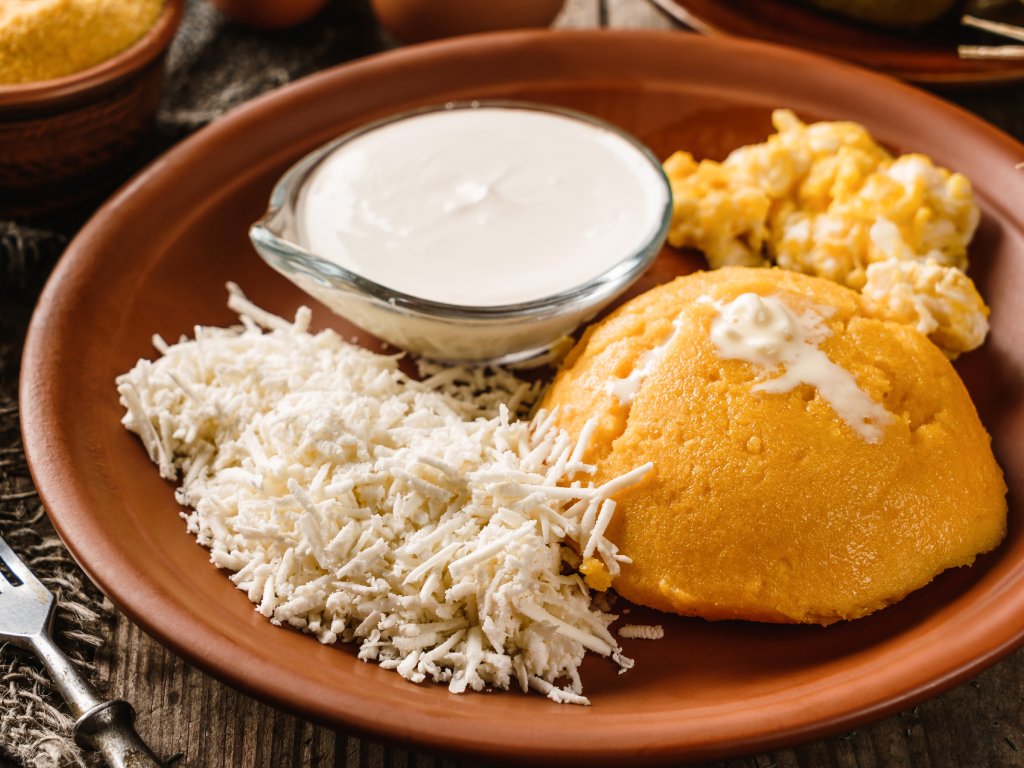 Mămăligă, Romanian polenta
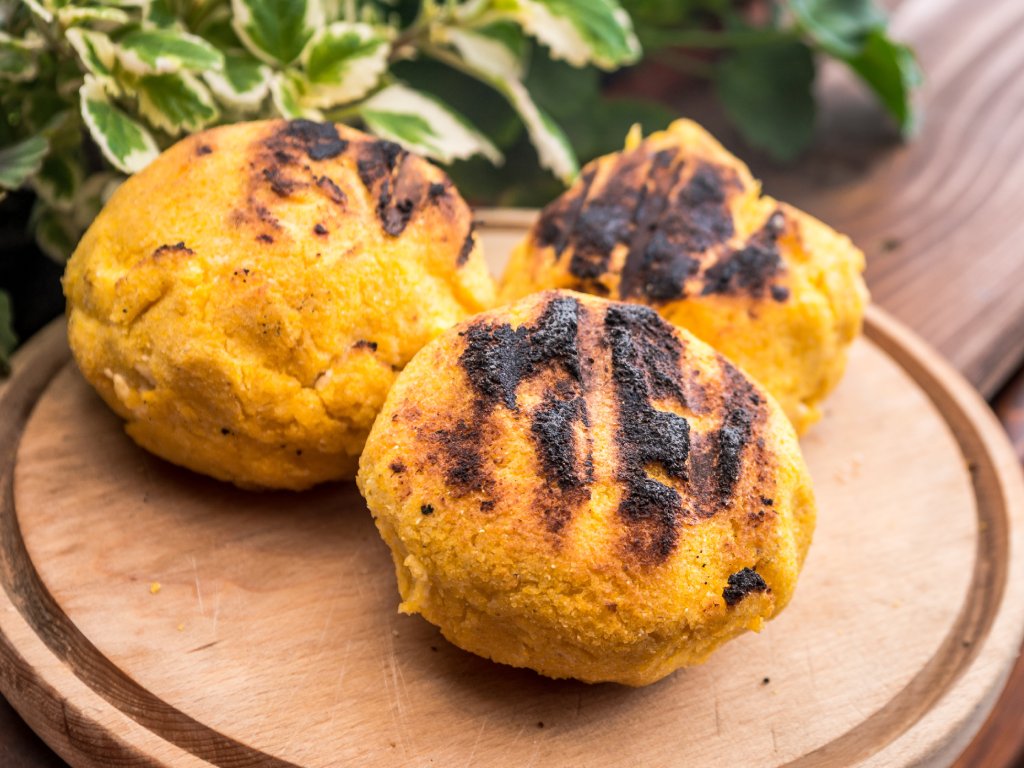 Bulz is grilled mămăligă stuffed with cheese
Desserts: Worth the Extra Calories
Romanian desserts are unapologetically indulgent, and cyclists rarely regret them.
Papanași are the most famous: fried or boiled doughnuts served with sour cream and jam. They’re often enormous and best shared, though after a good ride you’ll probably manage it solo.
In regions with German and Hungarian influence, plum dumplings (găluște cu prune) are a highlight. Soft potato dough wrapped around whole plums, rolled in breadcrumbs and sugar.
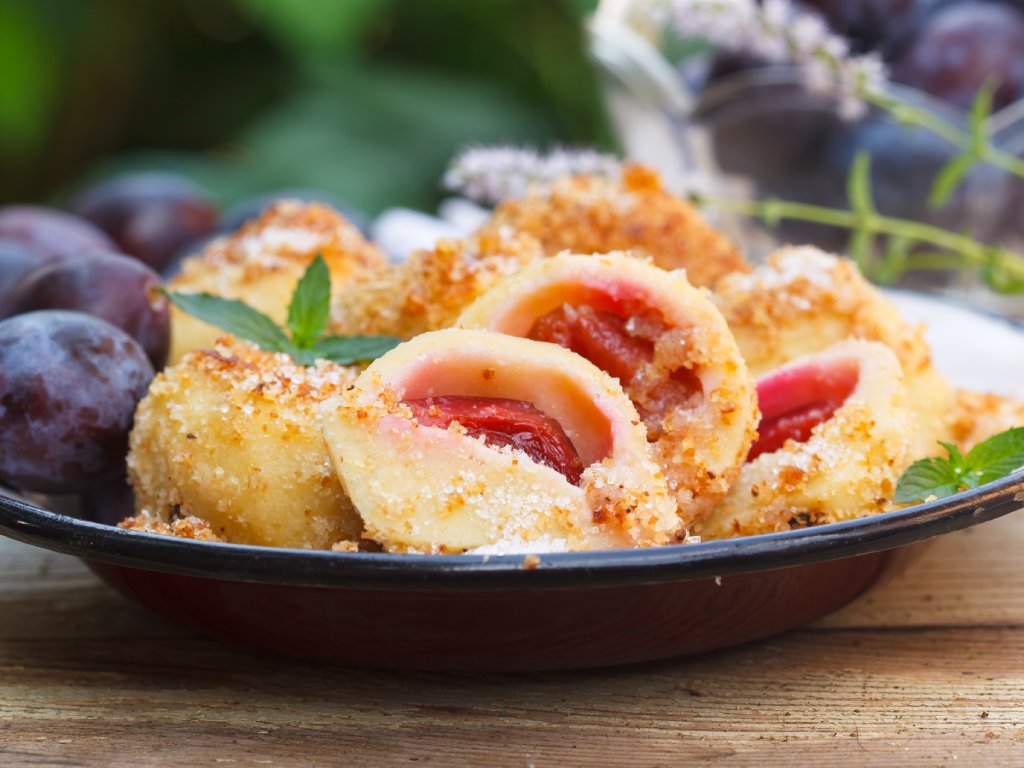
Plum dumplings were a huge favorite of mine when I was a kid.
In the Szekler regions of Transylvania, you’ll often see kürtőskalács (chimney cake) baked over open coals and rolled in sugar, nuts, or cinnamon. It’s festive, aromatic, and almost impossible to pass without stopping.
Simple apple and cherry pies are everywhere in rural areas, often baked daily. One of our favorite stops for these is Belaalma Rural, where pies alone are reason enough to plan a route.
Drinks: For recovery after a long ride
Romania has a strong tradition of homemade drinks, especially fruit-based spirits.
Țuică, pălincă, and horincă are all fruit brandies, with different names reflecting regional traditions. Plum is the most common base, but apricot, pear, and apple versions exist as well. These are cultural staples, usually offered in the evening.
Sweeter options include vișinată, a homemade sour-cherry liqueur that’s often served as a dessert drink.
As with food, these drinks are about hospitality and tradition. Enjoyed slowly, and never rushed.
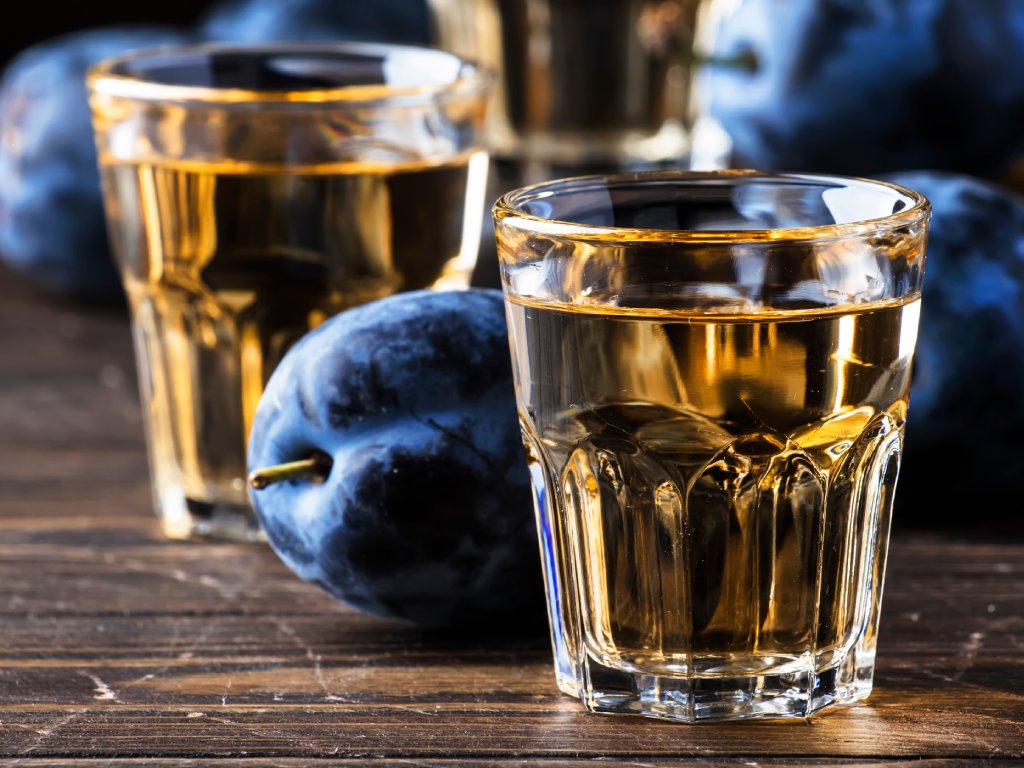
Horincă is Maramureș-style brandy.
Romanian food is an experience in itself
Food in Romania isn’t a side note to cycling, it’s part of the experience. From simple soups at lunch to long, generous dinners in family-run guesthouses, meals shape the rhythm of each day on the bike.
If you ride with an open mind and a healthy appetite, you’ll find that Romanian food is honest, regional, and deeply connected to the landscapes you pass through. For many cyclists, it becomes one of the most memorable parts of the journey. One plate, one village, and one shared table at a time.